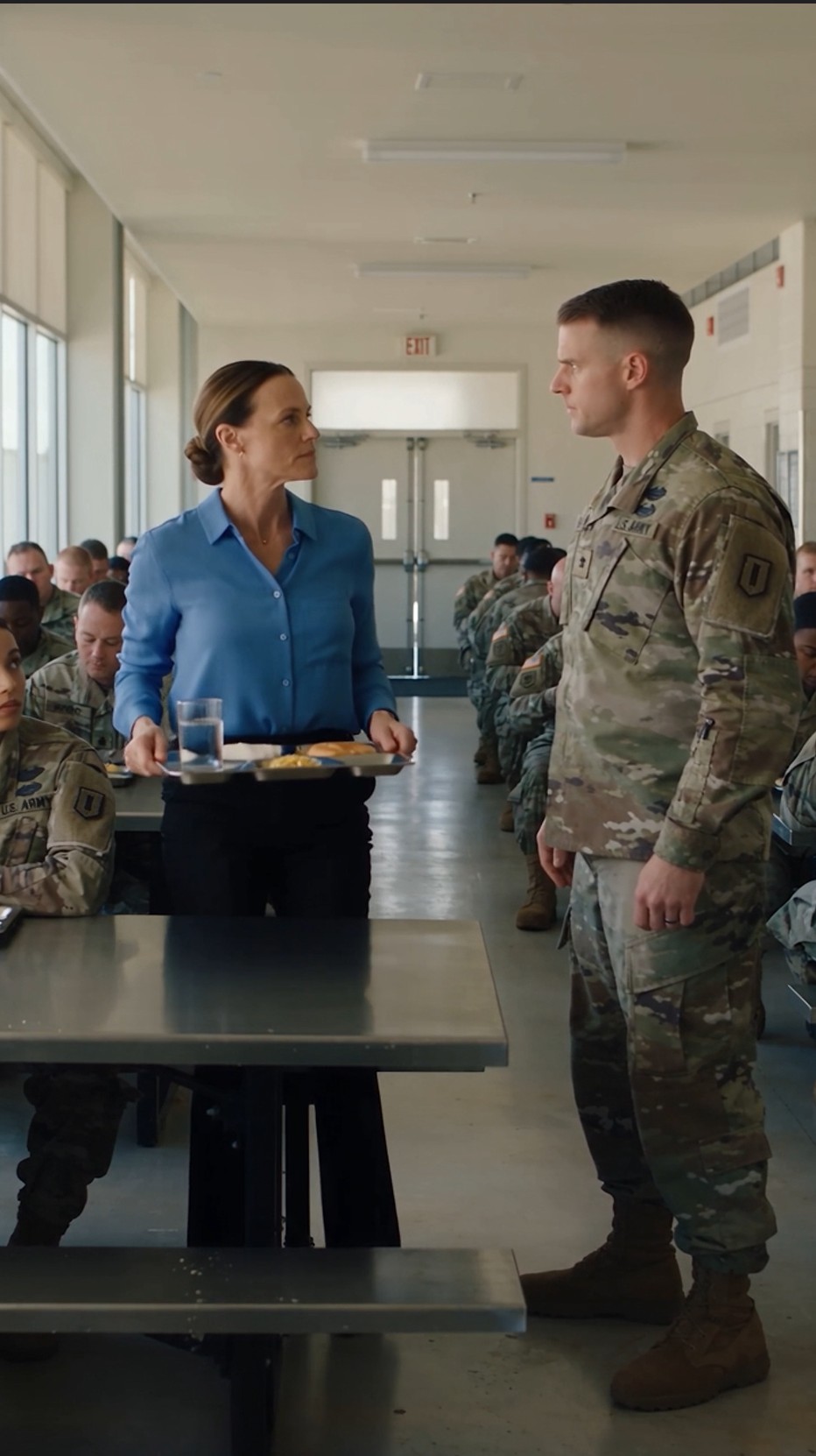
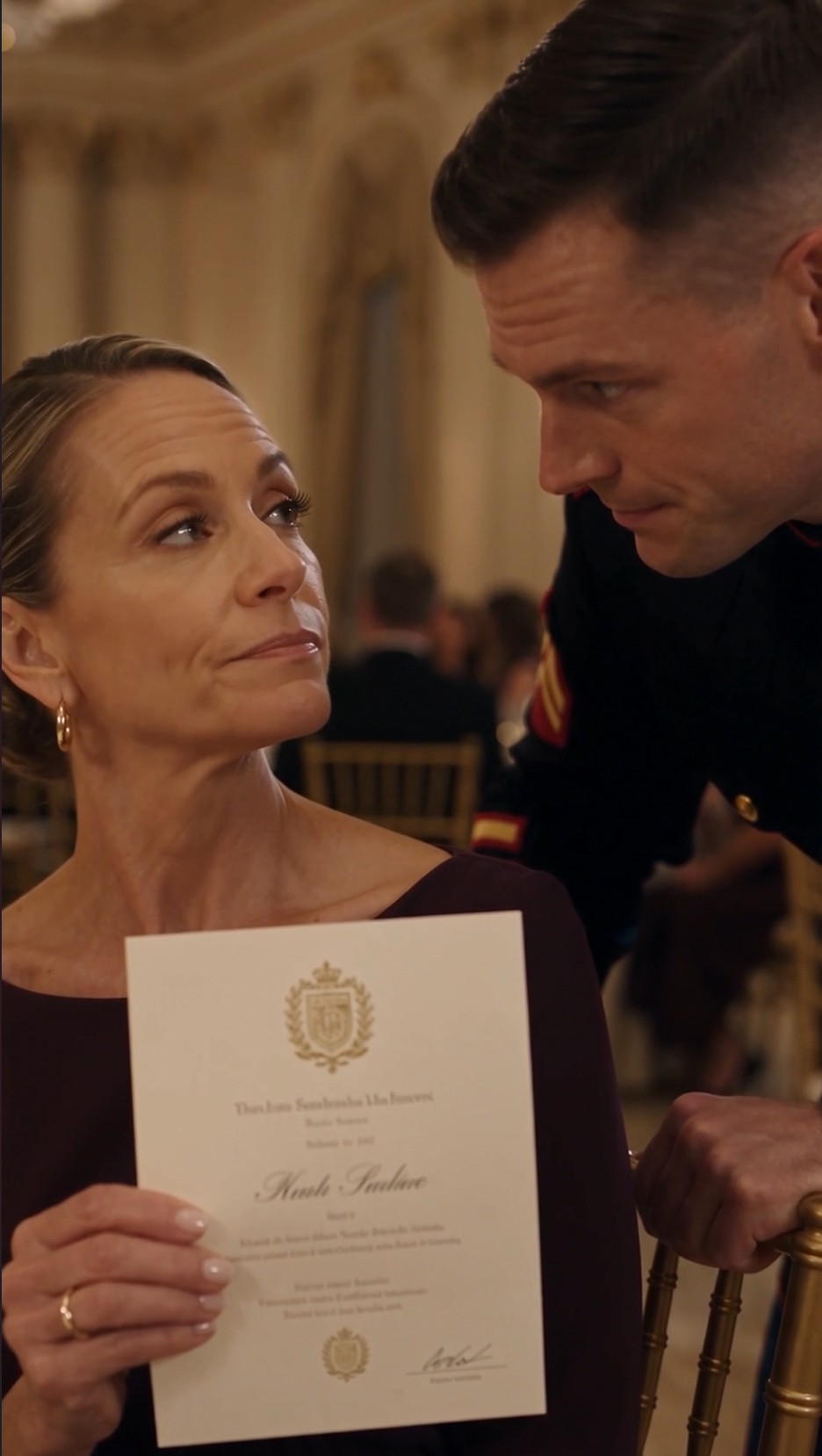
She had spent her whole life feeling like she didn’t belong.
Not in the neighborhood where she grew up. Not in the schools she attended on scholarship. Not in the conversations people had around her, about families with history, with names that carried weight, with heirlooms passed down through generations. She had none of that. Just her mother’s quiet sadness, a small apartment, and a bracelet she had been told never to take off.
“One day,” her mother used to whisper, smoothing her hair before bed, “someone will look at you and simply know.”
She never fully understood what that meant. She assumed it was the kind of thing struggling mothers said to help their children sleep. A beautiful promise wrapped in mystery. Something to hold onto when the world felt cold and indifferent.
And the world had been cold. Especially tonight.
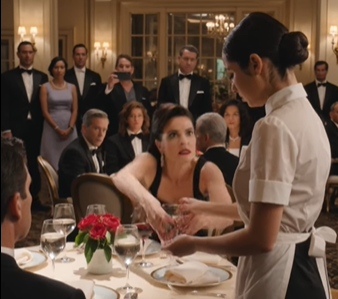
She was working the dinner rush at one of the most expensive restaurants in the city. The kind of place where women arrived in designer dresses and men checked their watches like time itself was something they owned. She had been on her feet for seven hours. Her uniform was damp from where she had rushed to refill a water glass and misjudged the angle. It wasn’t much. A small splash. The kind of accident that happens in every busy restaurant on any given night.
But the woman at table nine had not seen it that way.
She had risen from her chair slowly, deliberately, the way powerful people do when they want to make absolutely certain the room is watching. Her voice had carried across the entire dining floor. Every word had been chosen to wound. She called her clumsy. Incompetent. She implied, loudly enough for nearby tables to hear, that some people simply weren’t built for certain environments. That some people would never belong in rooms like this, no matter how hard they tried.
The restaurant had gone quiet.
People stared. Some filmed. Some pretended not to look while looking anyway.
She stood there absorbing it, the way she had absorbed a hundred smaller humiliations before this one, and tried to hold herself together. But something inside her had finally reached its limit. Her hands were shaking. Her eyes filled despite every effort to stop them. And when she reached up instinctively to steady herself, her fingers found the bracelet at her wrist, the way they always did when she needed grounding.
She didn’t think about it. She simply held it out, the way her mother had once told her to, if she ever found herself in a room with people who looked like they carried old money and older secrets.
The woman at table nine stopped speaking mid-sentence.
The color left her face so completely that several people nearby actually turned to look at her instead.
And then a sound came from across the room. A chair scraping back. Heavy footsteps. A man who had been dining quietly with business associates, a man whose name appeared on buildings and charitable foundations, a man who had spent decades carrying a particular kind of grief that never fully left his eyes, walked toward her like someone moving through a dream he had stopped believing in long ago.
He looked at the bracelet.
His hands began to shake.
Because engraved along the inside of that bracelet were four words he had chosen himself, a private message meant for a daughter he had been told died before he ever had the chance to hold her. The hospital had given him a closed file and a sealed conversation. His family had given him silence. The people closest to him had insisted, firmly and repeatedly, that some doors were better left unopened.
He had grieved privately. He had carried it quietly. He had built a life on top of a wound that never quite healed, the way people do when they are told they have no other choice.
Now he was standing in the middle of a restaurant looking at his own words on a stranger’s wrist.
He looked at her face. Properly. For the first time.
The shape of her eyes. The line of her jaw. The particular way she held tension in her expression when she was trying not to cry. He had seen that face once before, in an old photograph, in a mirror when he himself was young.
His voice, when it finally came, was barely recognizable.
“My daughter.”
She covered her mouth with both hands. Because all her life, in every room that had ever made her feel small or out of place or undeserving, she had never once heard those two words directed at her. And now they were coming from a man whose grief was written so plainly across his face that half the room had tears in their eyes before they even fully understood what they were witnessing.
He lowered himself to his knees on that restaurant floor without a single thought for appearances or dignity or what anyone around him might think.
Because the child he had been told was gone had simply been hidden.
Raised far away. Kept from her own name. Denied the life, the father, and the belonging that should have always been hers.
The woman at table nine had stopped moving entirely. She stood frozen beside her chair, watching a secret she had guarded for decades quietly collapse in front of strangers, cameras, and a daughter who had spent her whole life being told she was less than she actually was.
Some lies, no matter how carefully they are constructed, simply cannot survive the moment a bracelet catches the light in the wrong room.
And some children, no matter how far they are hidden, carry their father’s face in ways that time cannot erase.
She had walked into that restaurant as a waitress. She walked out of it as someone’s daughter. Someone’s little star. Exactly as her mother had always known she would.