He stood at the altar looking like a man whose entire world had just collapsed beneath his feet — and in many ways, it had.
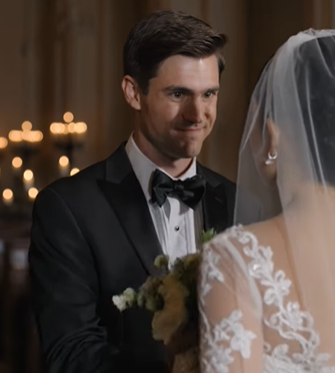
“I didn’t forge anything,” he said.
He said it too quickly.
That was the moment everyone in the church understood the truth. Not because of what he said, but because of the speed at which he said it. That kind of desperate quickness only comes from one place: fear. Deep, bone-level fear from someone who knows exactly what they’ve done.
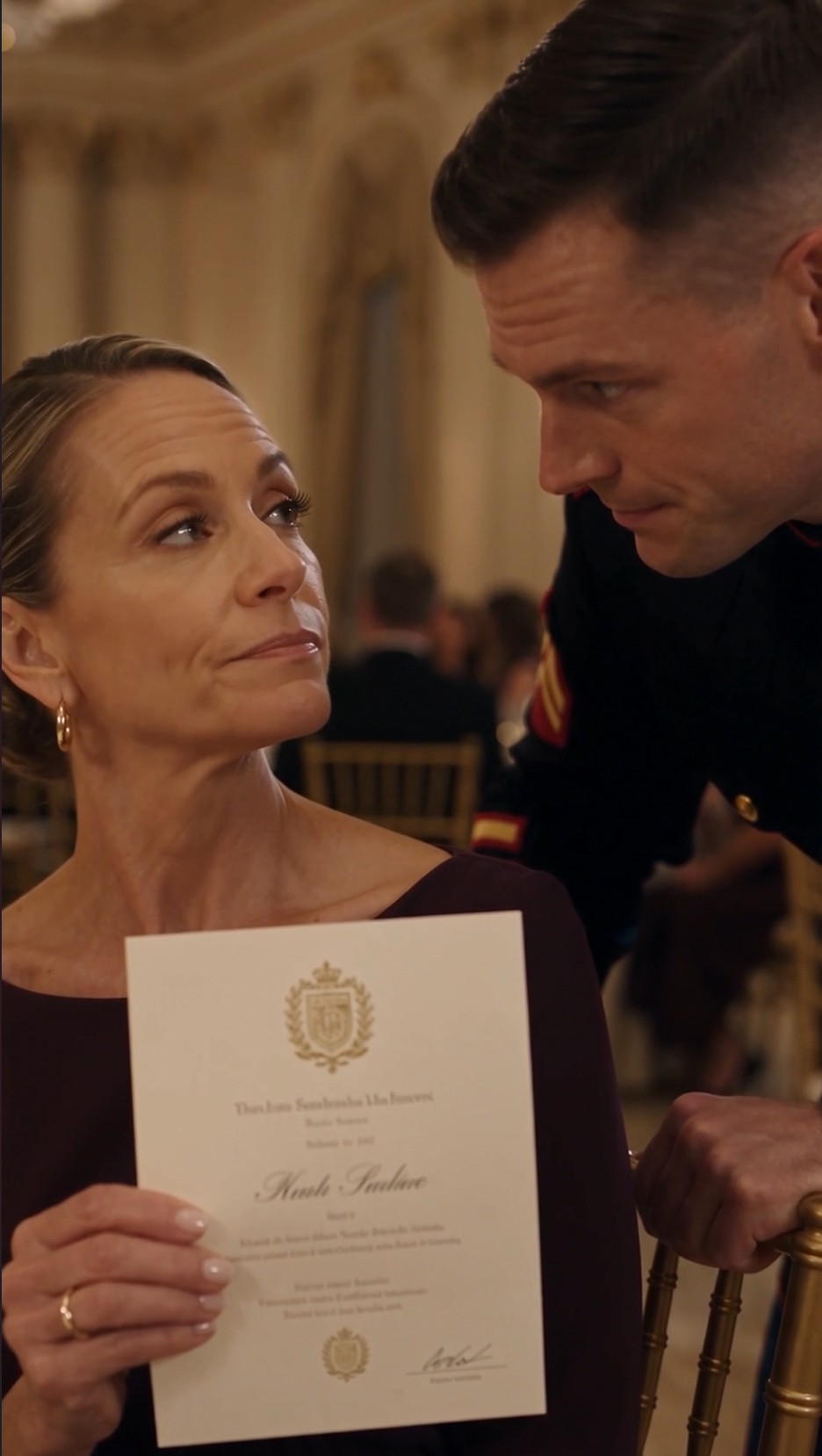
The bride’s father stood at the end of the aisle holding a single sheet of paper between two fingers, the way a man holds something he finds both disgusting and deeply important. His expression was calm. Controlled. The kind of calm that doesn’t come from peace — it comes from power.
“This,” he said quietly, “is a transfer authorization.”
The bride looked at her father through a blur of tears. “Transfer of what?”
He turned the paper so she could see it clearly.
Her own name was printed across the top.
Beneath it sat a signature that looked almost exactly like hers.
Almost.
Her hands began to shake.
“I never signed that,” she whispered.
“I know,” her father said simply.
The groom tried to recover, stepping forward with the kind of desperate charm that surfaces when a man realizes his carefully constructed world is crumbling. “This is a misunderstanding. She gave me permission to handle some paperwork—”
Her father silenced him with a single, cold glance.
“No,” he said. “She gave you trust.”
Those five words hit harder than any shout could have. They landed in the chest of every person sitting in those pews and stayed there. Because everyone in that room had trusted someone at some point. Everyone had handed over something precious and prayed it would be protected.
The guests had gone completely still. Even the priest seemed to hold his breath.
The bride stared at the document again and felt the room tilt around her.
“What was he transferring?” she asked softly.
Her father answered without ever taking his eyes off the groom.
“Your shares.”
The church fell into a different kind of silence — not the hushed reverence of a wedding, but the stunned quiet of people who suddenly understand they are witnessing something far more serious than a ruined ceremony.
This was no longer simply about humiliation at the altar.
This was about money. Power. And a plan that had been running in the background for a very long time.
For months, he had been pressuring her to sign documents she never fully read. Small things, he called them. Business formalities. Temporary authorizations. He framed every piece of paperwork as harmless, routine, something couples simply handle before they settle into married life together.
She had refused more than once. She had hesitated. She had listened to the quiet voice inside her that said something wasn’t right.
So he had adapted his plan.
If she would not sign willingly, he would marry her first. Gain legal standing. Then move the shares once the marriage made it easier and harder to question.
Only the wedding had fallen apart before the fraud could finish hiding itself.
The groom’s face changed. The charming performance he had been wearing for months began to crack open. “You don’t understand how much I’ve invested in this,” he snapped.
The bride looked at him as though she were seeing a stranger.
Invested.
Not loved. Not cherished. Not built a future with.
Invested.
Her father gave a slow, humorless smile. “Oh, I understand perfectly. You approached my daughter under a false impression, concealed serious financial debt, accessed her planning documents to gather information, and intended to secure control the moment the marriage made it legally convenient.”
A wave of murmurs rolled through the pews like a tide.
The groom looked around the room wildly, searching for someone who might still be on his side.
No one moved.
Then the bride wiped the tears from her cheeks with the back of one trembling hand and asked the only question that truly mattered.
“How long?” she said.
He said nothing.
That silence was its own answer.
But her father provided the one that would change everything.
“Long enough,” he said, “that he never realized the woman he dismissed as ordinary was already the largest private shareholder in my company.”
The groom went completely white.
Because everything he had quietly looked down on about her had been built on a misunderstanding he chose to make. Her simple clothes. Her modest apartment. Her quiet, unassuming life. Her total lack of interest in showing off wealth.
He had mistaken her privacy for poverty.
And now that mistake stood directly over him.
Her father folded the forged document once, placed it carefully into his pocket, and gave the groom one final measured look — the kind that closes doors permanently.
“You won’t be returning to the office,” he said.
Then, even more quietly:
“And you may want to contact a lawyer before the authorities arrive.”
The bride closed her eyes for just one second.
Not from weakness.
From release.
When she opened them again, the tears were still there — but what lived behind them had shifted completely. Because now she understood the full picture. He had not overlooked her because she was too small for his world. He had chosen her precisely because he believed she would be easy to take advantage of.
Her father reached out his hand.
“Come on,” he said gently. “Let’s get you out of here.”
She took one step toward him.
But before they could turn away, the groom spoke again in a voice that had broken open completely.
“Wait… if she’s your daughter… then who exactly have I been reporting to for the last six months?”
His eyes moved back and forth between the father and the bride as the full weight of what he had done landed on him all at once.
The father said nothing.
The bride answered.
And for the first time since she had walked into that church, her voice was completely, unmistakably steady.
“You,” she said quietly, “have been sending every confidential update directly to the new executive director.”
She let the silence breathe for just a moment.
“That’s me.”