“You have to move out by April first.”
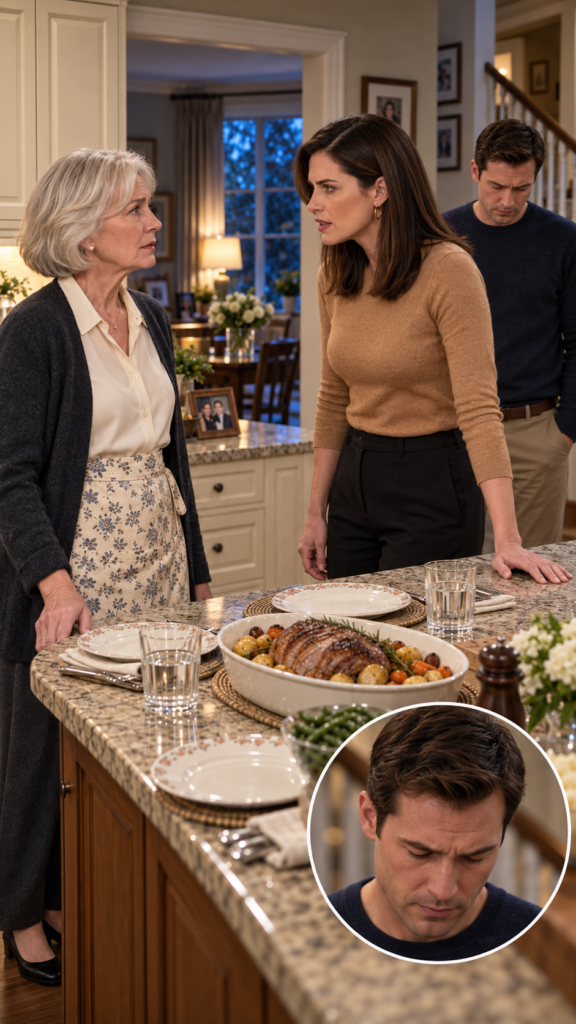
My daughter-in-law said it calmly.
Almost professionally.
As though she were informing a tenant that a lease had expired.
“Michael and I need the house now.”
Kendra stood in the middle of my Richmond kitchen with one hand resting against the counter.
Behind her, my son stared at the floor.
The pot roast sitting between us was Michael’s favorite meal.
He had not touched it.
Neither had I.
“We need the space to start a family,” Kendra continued. “You could rent somewhere smaller.”
I looked at her.
Then at Michael.
He still would not meet my eyes.
I had owned that house for thirty-four years.
My husband James had repaired the porch with his own hands.
He planted the dogwood trees along the driveway.
He replaced the upstairs windows.
And six months before he died, he made the final mortgage payment.
Yet somehow, three years after my son asked to stay “temporarily,” his wife was standing in my kitchen explaining when I needed to leave.
I waited for Michael to correct her.
He finally lifted his head.
Then gave one small nod.
That hurt more than anything Kendra had said.
I removed my apron.
Folded it once.
Then placed it carefully on the counter.
“Very well.”
Kendra’s shoulders relaxed.
Michael finally looked at me.
“I’ll make the necessary arrangements.”
The relief on their faces was immediate.
Too immediate.
That told me something.
They believed the discussion was over.
It had actually just begun.
Three years earlier, Michael called me after dinner.
“Mom, we need a favor.”
He and Kendra were trying to save for their own house.
Rent was expensive.
Their lease was ending.
Could they stay with me?
“Only a few months.”
I said yes before he finished asking.
Of course I did.
He was my son.
They moved into two bedrooms upstairs.
At first, everything was easy.
Kendra cooked occasionally.
Michael helped with yard work.
They insisted they would contribute toward utilities.
Then somehow, most of the expenses continued coming from my account.
Electricity.
Water.
Internet.
Property taxes.
Insurance.
Groceries more often than not.
A few months became six.
Six became a year.
Then two.
And slowly, Kendra began changing things.
The first time, it was curtains.
“These make the room brighter.”
Then furniture.
“The sofa works better on this wall.”
Then kitchen shelves.
Then paint.
Then the guest bathroom.
When I objected, Michael always said some version of the same thing.
“She’s just trying to help, Mom.”
Help.
An interesting word.
Eventually, contractors started appearing.
One afternoon, I came home and found a man measuring my kitchen wall.
“What are you doing?”
He looked confused.
“Mrs. Brooks asked me to estimate opening this up into the dining room.”
I stared at him.
“I am Mrs. Brooks.”
His face changed.
Then Kendra walked in.
“Oh, Eleanor. I was going to tell you.”
“Tell me what?”
“That we’re exploring options.”
“For my wall?”
She laughed.
“It’s only an estimate.”
Michael later told me not to make a big issue out of it.
So I didn’t.
That had been my mistake.
Every boundary I failed to defend became evidence to them that no boundary existed.
Then, two months before the pot-roast dinner, I overheard Kendra speaking to another contractor.
I was coming downstairs when I heard her voice from the foyer.
“Michael says the house will be in his name before renovations start.”
I stopped halfway down the stairs.
The contractor asked:
“When is the transfer happening?”
“Soon.”
Kendra sounded completely certain.
“His mother knows this place is too much for her.”
I stood there silently.
Too much for me.
That was new.
I waited until the contractor left.
Then said nothing.
Not because I agreed.
Because for the first time, I wanted to know how far the assumption went.
Michael had asked me several times whether I planned to put the house in his name someday.
I always gave him the same answer.
“We can talk about that later.”
Later.
Apparently, my son had translated later into yes.
And yes into already mine.
So when Kendra stood in my kitchen and told me I had until April first to leave, I did not argue.
I went upstairs.
Closed my bedroom door.
Then opened the fireproof case in my closet.
The deed rested exactly where it always had.
I unfolded it.
Eleanor Mae Brooks.
Sole owner.
No Michael.
No Kendra.
No joint tenancy.
No transfer.
Just me.
I read it twice anyway.
Then smiled.
The next morning, I came downstairs carrying several apartment listings.
Kendra was drinking coffee at the kitchen island.
“I found a few places.”
Her face brightened.
“That’s great.”
I placed the pages in front of her.
“One-bedroom apartments.”
She barely looked at them.
Instead, she opened her tablet.
“I’ve been thinking about flooring.”
I stared.
“What?”
“For after you move.”
She showed me samples.
Wide-plank oak.
Luxury vinyl.
Tile.
Then:
“And I want to take down this wall.”
She pointed toward the kitchen.
“The contractor says it could really open the whole space.”
I looked at her.
“Does Michael know?”
“Of course.”
She smiled.
“We’ve been planning for months.”
Planning.
There it was.
Not discussing.
Not asking.
Planning.
I nodded.
“Interesting.”
Kendra looked pleased.
That afternoon, I called Dana Patel.
Dana had handled James’s estate.
She also updated my will after he died.
I explained everything.
The living arrangement.
The contractors.
The comments.
The April first deadline.
Then the sentence about transferring the house into Michael’s name.
Dana became quiet.
Finally:
“The county records are perfectly clear.”
“I know.”
“You are the sole owner.”
“Yes.”
“They have no legal ownership interest.”
“I understand.”
“And they cannot make you leave.”
“I know.”
Another pause.
“So what do you want to do?”
I looked toward the hallway.
Kendra was talking loudly on the phone about cabinet hardware.
“I want their intentions documented.”
Dana was silent for a moment.
Then:
“In writing?”
“Yes.”
“Why?”
“Because Michael will eventually say this was all a misunderstanding.”
That made her laugh once.
Not because it was funny.
Because she understood.
“Good.”
Her tone changed.
“Then don’t confront them yet.”
“I wasn’t planning to.”
“Ask simple questions.”
“What kind?”
“Dates.”
“Terms.”
“Ownership assumptions.”
“Renovation plans.”
“Anything they believe gives them the right to remove you.”
I smiled.
“And let them answer.”
“Exactly.”
Two days later, I made tea.
Then sat down with Michael and Kendra.
“I’ve been thinking about April first.”
Kendra smiled.
“Good.”
Michael looked relieved.
“What do you need?”
“I want to make sure I understand everything.”
He nodded.
“Of course.”
I took out a notebook.
Kendra frowned.
“What’s that?”
“I’m seventy-one years old.”
I smiled.
“I like writing things down.”
That seemed to satisfy her.
“First.”
I looked at Michael.
“You want me completely moved out by April first?”
He hesitated.
Then nodded.
“Yes.”
I wrote it down.
“And after that?”
Kendra answered.
“We’ll begin renovations.”
“What renovations?”
She started listing them eagerly.
Kitchen wall removed.
New flooring.
Primary bathroom expanded.
One upstairs bedroom converted into a nursery.
My sewing room turned into a home office.
Then she said:
“We’ll redo the master eventually too.”
I looked at her.
“My bedroom?”
She paused.
“Well, it would become ours.”
I wrote that down.
Michael shifted slightly.
“Mom, don’t make it sound harsh.”
“I’m only recording what you’re telling me.”
Silence.
Then I asked:
“And who is paying for the renovations?”
Michael answered.
“We’re arranging financing.”
“Against what?”
A pause.
“The house.”
I stopped writing.
“My house?”
He immediately corrected himself.
“The house.”
I looked at him.
“How do you finance renovations against property you don’t own?”
Kendra gave him a quick glance.
There it was.
That tiny signal between two people who had discussed something they had not yet told me.
Michael cleared his throat.
“We assumed you would transfer it before then.”
My pen did not move.
For several seconds, the only sound in the kitchen was the faint ticking of the clock above the doorway and the low mechanical hum of the refrigerator.
Kendra watched me.
Michael watched the notebook.
I looked at my son.
“Based on what?”
His mouth opened.
Nothing came out.
Kendra leaned forward slightly.
“Eleanor, you’ve always said Michael would have the house someday.”
“No.”
Her eyebrows lifted.
“I said we could talk about it later.”
“That means essentially the same thing.”
“It means exactly what it says.”
Michael rubbed one palm over his knee.
“Mom, we just thought—”
“You thought I had agreed to give you my home?”
His eyes dropped.
Kendra exhaled through her nose.
“We’ve been living here for three years. We’ve invested time in this house.”
I looked around my kitchen.
At the cabinets James and I had chosen together.
At the patch of morning sunlight falling across the floor.
At the wall Kendra intended to remove.
Then I looked back at her.
“What have you invested financially?”
The color in her face shifted.
“That isn’t the point.”
“It is one of them.”
Michael straightened.
“Mom.”
I turned to him.
“Have either of you paid the property taxes?”
“No.”
“The homeowner’s insurance?”
“No.”
“The mortgage?”
“There isn’t one.”
“Because your father and I paid it.”
He flinched.
I hated that some part of me still noticed.
Still wanted to soften my voice because he was my child.
But that instinct had helped bring us here.
I closed the notebook.
“If I’m expected to leave my house, and you’re expecting me to transfer ownership before you borrow against it, I want the arrangement written down.”
Kendra blinked.
Then, slowly, she smiled.
“Fine.”
Michael turned toward her.
“Kendra.”
“What?”
She looked almost amused.
“If it makes Eleanor feel better, we’ll put it in writing.”
I held his gaze.
“Both of you.”
He swallowed.
“Okay.”
“Include the date you expect me to move.”
Kendra nodded.
“The transfer.”
Another nod.
“The renovations.”
“Yes.”
“And the financing.”
Michael’s jaw tightened.
“Why does all of that matter?”
“Because I want there to be no misunderstanding.”
The words landed between us.
Michael looked away first.
That evening, at 9:17, an email arrived.
The subject line read: HOUSE TRANSITION.
I sat at the small desk in my bedroom and read it once.
Then again.
Kendra had written most of it.
I could hear her phrases.
Eleanor would vacate the residence no later than April first.
Ownership would then be transferred to Michael Brooks.
Michael and Kendra would assume responsibility for future expenses and renovation financing.
Work would begin following transfer.
The kitchen wall would be opened.
The primary bathroom would be expanded.
The upstairs rooms would be reassigned according to their planned use.
My bedroom was described as “the future primary suite.”
My sewing room was “the office.”
Not one sentence asked whether I agreed.
It read as though the only unfinished detail was my cooperation.
At the bottom were their names.
Michael Brooks.
Kendra Brooks.
I stared at my son’s name longest.
Then I forwarded the email to Dana.
Her reply came four minutes later.
Do not respond tonight.
I didn’t.
The next morning, Michael found me pruning a rosemary plant near the kitchen window.
“Did you see the email?”
“Yes.”
He waited.
When I said nothing else, he shifted his weight.
“Is it what you wanted?”
I clipped one dry stem.
“It is exactly what I wanted.”
He looked relieved.
That nearly broke my heart.
Not because he was cruel.
Because he still did not understand.
Dana came to the house the following afternoon.
Kendra opened the door.
I heard the brightness leave her voice almost immediately.
“Oh.”
Dana stepped inside carrying a slim leather folder.
“Good afternoon.”
Michael appeared from the hallway.
“Dana?”
He had met her at James’s funeral.
He knew exactly who she was.
His face changed before she said another word.
Kendra looked from him to me.
“Why is your attorney here?”
I set three sheets of paper on the dining table.
“Because I wanted to make sure there was no misunderstanding.”
Nobody sat.
Dana remained beside me, calm and composed.
“I’ve reviewed the county records,” she said. “I’ve also reviewed the written statement Michael and Kendra sent Eleanor last night.”
Kendra’s eyes snapped toward me.
“You sent that to her?”
“Yes.”
“You asked us to put it in writing.”
“I did.”
A silence opened.
Then Michael whispered, “Mom.”
Dana continued.
“The property belongs solely to Eleanor Mae Brooks. There has been no transfer, agreement to transfer, promise to transfer, option, contract, or legal document granting either of you an ownership interest.”
Kendra folded her arms.
“We know it’s technically in her name.”
Dana’s expression did not change.
“Ownership is not a technicality.”
Kendra’s jaw tightened.
“She’s seventy-one.”
I felt something inside me go very still.
Dana looked at her.
“And?”
“This house is a lot to maintain.”
“I maintain it.”
Kendra turned toward me.
“You hire people.”
“So do millions of homeowners.”
“That isn’t what I meant.”
“I know exactly what you meant.”
Michael took a step forward.
“Can everybody just stop?”
I looked at him.
“No.”
He froze.
It was the first time in three years I had said that word to him without softening it afterward.
“No, Michael. We are not stopping because this has become uncomfortable for you.”
His face crumpled for half a second before he controlled it.
Dana opened her folder.
“There is something else.”
Kendra’s arms loosened.
Dana removed a printed email.
“One of the contractors who visited this property contacted Eleanor this morning after she informed his office that no renovations had been authorized by the owner.”
Kendra stared at the paper.
“He didn’t need to contact her.”
“He absolutely did.”
Dana placed the page on the table.
The contractor had forwarded the preliminary work schedule Kendra had requested.
Measurements.
Projected costs.
A proposed start date three days after April first.
At the top, beneath the address, someone had written:
OWNER CONTACT: MICHAEL BROOKS / KENDRA BROOKS.
I looked at Michael.
He went pale.
Kendra reached for the page.
“It’s just how they entered it in their system.”
Dana kept one hand on the paper.
“The contractor says he was told ownership would be transferred before work began.”
Nobody spoke.
I turned toward my son.
“Did you tell them that?”
His breathing changed.
Kendra looked at him sharply.
“Michael.”
I waited.
He pressed both hands against the back of a dining chair.
Then he nodded.
Once.
“Yes.”
The room blurred at the edges.
Not because I was surprised.
I had already known.
But knowing privately and hearing your child confess aloud are different kinds of pain.
“When?”
He swallowed.
“Months ago.”
Kendra closed her eyes.
Michael kept going.
“I told them it would be in my name before construction.”
“Why?”
He looked at me then.
Really looked.
And I saw something I had not seen during the pot-roast dinner.
Shame.
Not discomfort.
Not inconvenience.
Shame.
“Because I thought you’d do it.”
His voice cracked.
“And because it was easier to tell them that than admit we hadn’t asked you.”
Kendra spun toward him.
“Why are you making it sound like we were scheming?”
Michael stared back.
“We were planning renovations to a house we didn’t own.”
“You wanted them too.”
“I know.”
“Then don’t stand there acting innocent.”
“I’m not.”
That silenced her.
Dana glanced at me.
It was my choice now.
That was why she had come.
Not to rescue me.
To make sure I understood I did not need rescuing.
I placed my hand on the table.
“When you came here three years ago, I thought I was helping my son save enough money to build his own life.”
Michael’s eyes filled.
“I never imagined you would use my generosity as a down payment on mine.”
“Mom—”
“Don’t.”
My voice was quiet.
He stopped.
I looked at Kendra.
“You told contractors I knew this house was too much for me.”
She said nothing.
“You discussed tearing down walls.”
Silence.
“You planned my bedroom.”
Her lips pressed together.
“You gave me a deadline to leave a house you have never owned.”
Her eyes hardened.
Finally she said, “What do you want, Eleanor?”
The question sounded almost angry.
As though my refusal had created the problem.
I answered carefully.
“I want my house back.”
Michael’s shoulders dropped.
Kendra stared.
“You live here.”
“No. I own it. There’s a difference.”
I looked toward the staircase.
“For three years, I have shared my home with you because I believed you were trying to get on your feet.”
My eyes returned to them.
“You stopped trying.”
Kendra’s face flushed.
“That’s not fair.”
“Neither was telling me to leave.”
Dana slid another document onto the table.
“This is not an eviction notice,” she said. “It is written notice that Eleanor is ending the informal living arrangement. We will follow every requirement that applies. You will have the lawful amount of time to secure other housing.”
Kendra stared at the paper.
“You can’t be serious.”
I almost laughed.
Not because anything was funny.
Because three days earlier she had spoken those same words to me as if removing me from my home were an administrative detail.
“I am.”
Michael sat down.
Slowly.
Like his knees had stopped working.
Kendra remained standing.
“What about our financing?”
Dana answered.
“You cannot secure financing against Eleanor’s property.”
“The lender already has the application.”
“Then you should contact the lender and correct any assumption that the property will belong to you.”
Kendra looked at Michael.
“You said this was handled.”
He raised his head.
“No.”
Her face changed.
“You said your mother would sign.”
“I said I thought she would.”
“You promised me.”
I watched my son absorb that.
Not as an accusation from his wife.
As evidence of what he had allowed himself to promise with something that was never his.
He whispered, “I had no right to.”
Kendra stepped backward.
For the first time since I had known her, she had nothing ready to say.
The power went out of her posture in pieces.
First her shoulders.
Then her chin.
Then the certainty in her eyes.
“You’re choosing her over our future,” she said.
Michael looked at me.
Then at the house around him.
“No.”
His voice was rough.
“I’m finally admitting her future wasn’t ours to take.”
Kendra left the room.
A second later, we heard the bedroom door upstairs slam.
The sound traveled through the house James and I had spent thirty-four years building a life inside.
Then there was silence.
Michael covered his face with both hands.
I wanted to go to him.
Every part of motherhood in me knew the distance between my chair and his.
I stayed where I was.
He needed to feel it.
Not as punishment.
As truth.
“I’m sorry,” he said through his hands.
I did not answer immediately.
When he lowered them, his eyes were red.
“I am so sorry.”
“I believe you feel sorry.”
His face tightened.
“That isn’t the same as repairing what you did.”
He nodded.
“I know.”
“No, Michael. I don’t think you do yet.”
His mouth trembled.
I looked at Dana.
Then back at him.
“You will.”
The weeks that followed were uglier than I wanted them to be and quieter than I expected.
The renovation financing disappeared the moment the lender learned there would be no property transfer.
The contractor canceled the tentative work schedule.
A deposit Michael and Kendra had paid from their own savings was partly refundable, minus planning and scheduling fees they had agreed to.
For once, none of the cost came from me.
Kendra barely spoke to me.
She packed with clipped movements and closed doors.
Boxes appeared in the hallway.
The flooring samples vanished.
The cabinet catalogs disappeared.
One morning, the paint swatches she had taped near the staircase were gone.
The walls underneath looked strangely pale.
Mine again.
Michael handled most of the practical arrangements.
He found a rental apartment across town.
Not large.
Not impressive.
Two bedrooms.
A small balcony.
A kitchen with cabinets Kendra hated.
When he showed me the listing, he did not ask what I thought.
He only said, “We signed the lease.”
I nodded.
“Good.”
On moving day, rain tapped softly against the front windows.
Kendra’s family came with two cars.
A moving company carried boxes down the stairs.
I stood near the dining room and watched pieces of the last three years pass through my front door.
Their television.
Their bed.
Kendra’s mirrors.
Michael’s books.
The expensive espresso machine they had bought while telling me they were still saving.
Nobody mentioned it.
By noon, the upstairs rooms sounded hollow.
Kendra came downstairs carrying her handbag.
She stopped near me.
For one second, I thought she might apologize.
Instead she said, “I hope you’re happy.”
I looked at her.
“No.”
That seemed to surprise her.
“I’m not happy this happened.”
She shifted her bag higher onto her shoulder.
“I’m happy it stopped.”
Her eyes flickered.
Then she walked out.
Michael remained behind.
He checked the rooms twice.
Closed the upstairs windows.
Carried one final box to the foyer.
Then he stood at the front door with his key in his palm.
It was an ordinary brass key.
I had seen it a thousand times.
That afternoon it seemed to weigh more than anything in the house.
He placed it in my hand.
“I should have remembered what this meant.”
I closed my fingers around it.
“You should have remembered who it belonged to.”
He nodded.
Outside, rain darkened the porch boards James had repaired himself.
Michael looked at the railing.
His hand rested on it for a moment.
“Dad would be ashamed of me.”
I felt the words hit somewhere deep.
“Your father loved you.”
Michael looked down.
“That isn’t what I said.”
“No.”
I stepped closer.
“But shame only matters if it changes what you do next.”
His eyes lifted.
I did not hug him.
Not yet.
He walked through the rain to his car.
I closed the door behind him.
Then I leaned against it.
The house was so quiet I could hear the water running through the gutters.
For three years, I had thought silence meant loneliness.
That afternoon, it sounded like safety.
I changed the locks anyway.
Not because I believed Michael would come back without permission.
Because I needed one physical act that belonged entirely to me.
Dana recommended the locksmith.
When he finished, he handed me three new keys.
I kept one.
Put one in the fireproof case.
Gave one to my neighbor, Ruth, who had been feeding my cat whenever I traveled for years.
Nobody else got one.
The first evening alone, I made soup.
Not pot roast.
Not Michael’s favorite anything.
Soup because I wanted soup.
I ate at the small kitchen table and left the dining room untouched.
Halfway through dinner, I realized I was listening for footsteps upstairs.
None came.
I started laughing.
Then, without warning, I cried.
Both feelings arrived together.
Relief and grief.
I let them.
Michael did not call for nine days.
When he finally did, I stared at his name on my phone until the last ring.
Then I answered.
“Hi, Mom.”
“Hello, Michael.”
His breathing sounded uneven.
“I wanted to tell you I opened my own account for the utilities.”
I almost smiled.
“That’s usually how apartments work.”
He gave a small, embarrassed laugh.
“Yeah.”
Silence.
Then:
“I made a spreadsheet.”
“For what?”
“What Kendra and I should have been paying you.”
My hand tightened around the phone.
“Michael.”
“I know I can’t undo it.”
“No.”
“I’m not pretending I can.”
He swallowed audibly.
“But I want to repay something. Utilities. Groceries. Whatever I can document.”
“You don’t owe me three years of rent.”
“I know.”
“Then why are you doing this?”
A long pause.
“Because for the first time I looked at what you paid while we called ourselves temporary guests.”
I closed my eyes.
“I don’t want your guilt to become another thing I have to manage.”
“It won’t.”
His voice was quiet.
“I’ll send what I can. You don’t have to thank me. You don’t have to forgive me.”
That was the first thing he said that sounded like repair instead of apology.
The first payment arrived the following Friday.
It was small.
I almost sent it back.
I didn’t.
Two months passed.
Then three.
Michael came by only when invited.
The first time, he stood on the porch and rang the bell.
The sound startled me.
For most of his adult life, my son had walked into that house without knocking.
I opened the door.
He waited.
I realized what he was doing.
“Come in.”
His shoulders loosened.
He wiped his shoes on the mat.
It was such a small thing.
I nearly cried again.
Kendra did not come.
By summer, they had separated.
Michael told me over coffee on the porch.
He did not blame me.
That mattered.
“We were already in trouble,” he said.
I looked toward the dogwood leaves shifting in the warm breeze.
“The house didn’t cause it.”
“No.”
He rubbed his thumb over the edge of his cup.
“It gave us something to avoid looking at.”
“What?”
He was quiet for a long time.
Then:
“We had started measuring our life by what we thought we were entitled to next.”
He looked ashamed.
“The house. Renovations. A bigger future. I kept telling myself it was okay because someday it would all be mine anyway.”
I looked at him.
“And Kendra?”
“She still thinks you humiliated us.”
“I exposed what you were doing.”
“I know.”
He nodded.
“That’s why we couldn’t fix it.”
Their divorce became final the following winter.
There was no dramatic courtroom battle.
No revenge.
No final confrontation.
Kendra moved closer to her family.
Michael stayed in Richmond.
The future they had designed around my property disappeared completely.
It never came back.
And slowly, my son began building one that actually belonged to him.
He kept making the payments.
He stopped when the amount he had calculated for utilities and groceries was finished.
He sent me the spreadsheet afterward.
Every line balanced.
At the bottom he had written:
I know this does not buy forgiveness.
I called him.
“No,” I said when he answered.
“It doesn’t.”
He was silent.
“But it tells me you understand something now.”
“What?”
“That love is not a debt you collect against someone else’s life.”
He breathed in.
“Thank you.”
“Don’t thank me.”
I looked around the kitchen.
“Remember it.”
“I will.”
Dana helped me update my will again.
This time, Michael knew nothing about the details.
That was intentional.
I did not disinherit him.
I also did not promise him the house.
For the first time, I understood those were not opposite choices.
Love did not require surrender.
Boundaries did not require cruelty.
I could leave him something one day without allowing him to live as though it belonged to him now.
The sewing room stayed a sewing room.
I repainted it myself.
Not because it needed paint.
Because I wanted to choose the color.
Soft green.
James always liked green.
The kitchen wall remained standing.
The guest bathroom stayed exactly where it was.
I moved the sofa back to the place I had preferred before Kendra decided it “worked better” somewhere else.
Then I moved it again.
Just because I could.
In early March, nearly a year after the pot-roast dinner, I opened the fireproof case to put away the updated estate documents.
The deed was there.
So were old insurance papers, James’s death certificate, tax records, and a thin envelope containing the final mortgage paperwork from years earlier.
I almost closed the case.
Then one yellowed page slipped sideways.
It was the receipt from the final mortgage payment.
I remembered the day immediately.
James had come through the front door carrying two grocery bags and wearing a ridiculous grin.
“Paid,” he had announced.
I had laughed because he said it like we had just won the lottery.
Later that evening, we opened a bottle of wine we had been saving.
I had not looked at the receipt in years.
I turned it over.
There were five words on the back in James’s handwriting.
Then two more beneath them.
Paid in full.
For Ellie.
I sat down on the bedroom floor.
My thumb moved over the faded blue ink.
Below that, squeezed into the corner as though he had remembered one last thing, he had written:
Stay as long as you want.
I covered my mouth.
For several minutes, I could not make a sound.
All those years I had remembered the final payment as a financial milestone.
James had understood it differently.
He had been giving me certainty.
Not property.
Not money.
A place no one could casually take from me.
I called Michael.
He arrived forty minutes later.
He rang the bell.
I let him in.
Without speaking, I led him upstairs and handed him the receipt.
He read the front.
Then turned it over.
His face collapsed.
He sat on the edge of the bed.
“Oh, Dad.”
I sat beside him.
Not touching.
Not yet.
He read the words again.
Then looked at me.
“I almost did exactly what he spent his life making sure nobody could do.”
The honesty of it hurt.
“Yes.”
His eyes filled.
“I’m sorry.”
“I know.”
This time, I reached for his hand.
His fingers closed around mine.
Not tightly.
Carefully.
We sat there in the afternoon light, the old mortgage receipt between us.
Nothing was magically repaired.
That was what made the moment real.
The damage still existed.
So did the love.
Michael returned the receipt to the envelope himself.
Then handed it back to me.
He did not ask what my will said.
He never asked again.
That spring, the dogwood trees bloomed heavier than I remembered.
White blossoms covered both sides of the driveway James had planted so many years before.
One Sunday, Michael came for dinner.
He brought groceries.
Not because I asked.
Because he had offered, and I had said yes.
He stood in the kitchen holding a bag of potatoes.
“Where do you want these?”
I looked at him.
A year earlier, his wife had been planning where my walls should go.
Now my son was asking where to put potatoes.
I pointed toward the lower cabinet.
“There.”
He nodded.
Then he put them exactly where I asked.
I laughed.
He turned around.
“What?”
“Nothing.”
“No, what?”
I shook my head.
“Just keep cooking.”
He smiled.
That evening we ate at the dining table.
Dana joined us.
So did Ruth from next door.
Nobody sat in James’s old chair until I told Michael he could.
He hesitated before pulling it out.
Then he looked at me.
“Are you sure?”
“Yes.”
He sat.
The question mattered more than the chair.
After dinner, Michael carried the plates to the sink.
Ruth opened the wine.
Dana complained about my refusal to replace a lamp she hated.
I defended the lamp.
Everyone talked at once.
The house felt full again.
But not crowded.
Full.
When the sun began to disappear, the windows turned blue.
I stepped onto the porch.
The dogwood branches moved softly above the driveway.
Behind me came the quiet clatter of dishes and Michael’s laugh.
I touched the railing James had repaired with his own hands.
The wood was cool beneath my palm.
For years, I had thought a home was the place where you kept the people you loved.
I finally understood something James had known all along.
A home was also the place where love was supposed to let you remain yourself.
Michael opened the door behind me.
“Mom?”
I turned.
He stayed inside.
He did not step onto the porch until I smiled and said, “Come on.”
Then he joined me.
We stood beneath the dogwoods without speaking.
The house glowed warmly behind us.
My house.
My choice.
My family, finally learning how to love me without owning any part of me.
And for the first time in a very long while, nobody was asking me to go anywhere.






