Nobody moved inside that boutique.
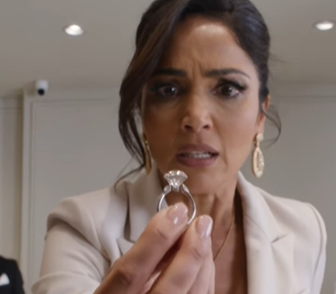
Not the customers browsing velvet trays of gold and diamonds. Not the staff standing stiffly behind glass counters. Not even the wealthy fiancée who had just raised her hand and slapped a young shop assistant across the face — in front of everyone, without a single moment of hesitation.
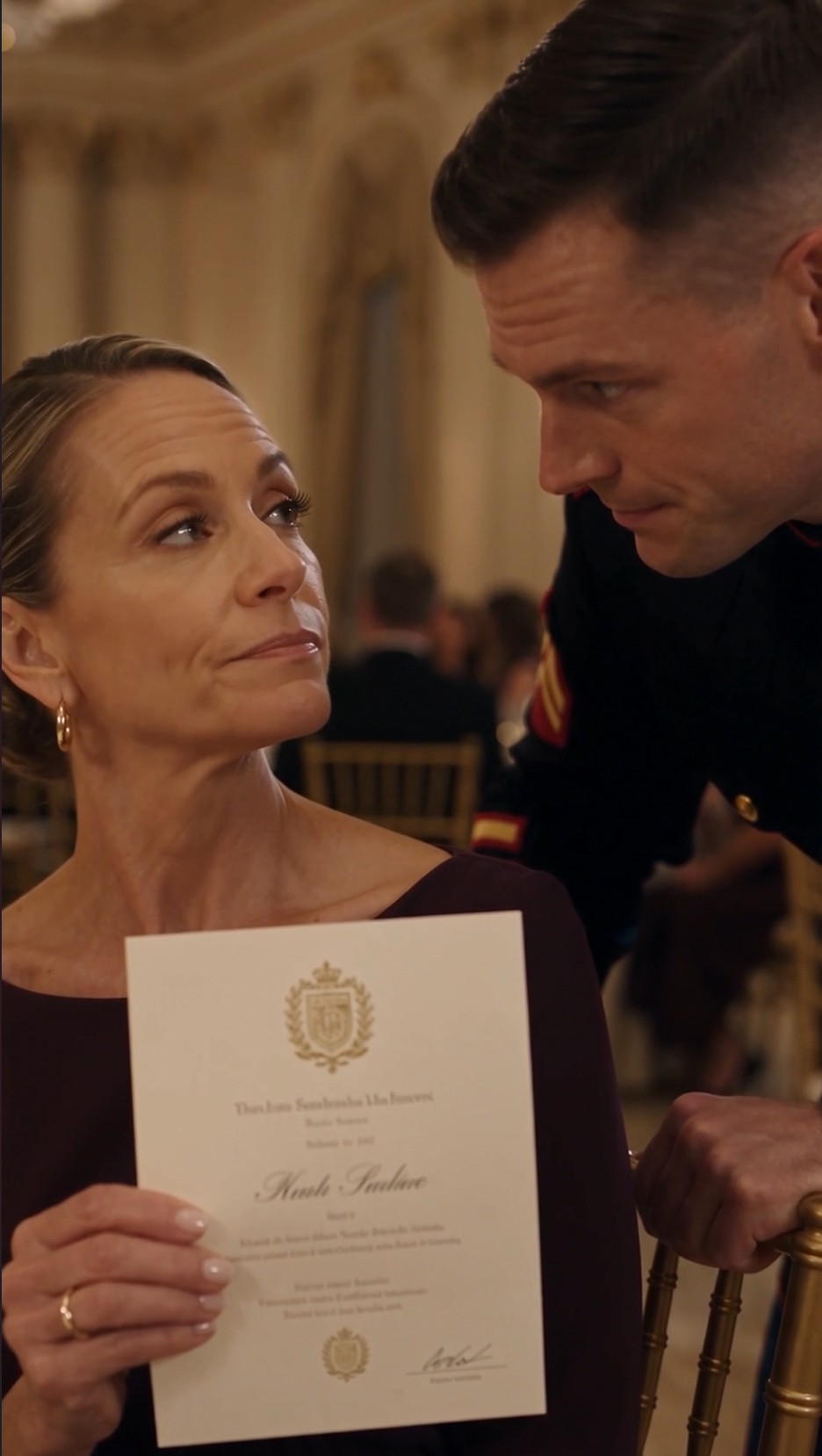
The only one who couldn’t move was the groom’s mother.
She stood near the doorway, one hand pressed against the wall, her face draining of every drop of color as though something inside her had finally come loose after years of being held too tight.
The groom turned slowly. Not toward his fiancée. Not toward the stunned crowd. He turned toward his mother, and his voice came out cracked and low, like a man who already sensed the ground beneath him was about to give way.
“Mother,” he said quietly, “why does Elena’s ring recognize this girl?”
The entire boutique seemed to exhale and go still.
The young assistant — the one who had just been accused of handling a ring that wasn’t hers to touch, the one whose cheek still burned red from the slap — reached into the front pocket of her apron. Her hand came out holding something small and old. A tiny, yellowed key, worn smooth at the edges from age.
“I found it,” she whispered, her voice barely holding together, “tucked inside my mother’s burial box. Wrapped beneath the cloth. Right next to the ring.”
The elderly jeweler behind the counter went rigid.
He knew that key.
He had not seen it in decades, but he knew it immediately — the key to the private archive drawer where the original bridal documents for a ring called Elena’s had been sealed away and forgotten.
The groom’s mother took one slow step backward toward the door.
“No,” she breathed. Just that. One word, hollow as an empty room.
The assistant’s tears were falling freely now, but something in her voice had changed. It was steadier. Quieter. The kind of quiet that comes from carrying a secret so long that finally saying it out loud feels like setting down something unbearably heavy.
“My mother passed away last month,” she said. “She raised me under a different name. She never told me everything — not until the very end. Before she closed her eyes for the last time, she made me promise her one thing: that if anyone from this family ever called me a thief, ever humiliated me, ever laid a hand on me, I was to bring the ring back here and let the jeweler open the drawer.”
The groom stared at her as though the walls of the room were slowly peeling back.
The old jeweler moved with trembling hands to the archive cabinet. He slid the key in. The drawer opened. Inside lay a thin velvet file coated in a fine layer of dust — untouched for years. He carried it to the counter and opened it carefully, as though it might dissolve.
Inside were the original order papers for the ring.
Bride listed: Elena V.
The date engraved on the papers matched the engraving inside the band, letter for letter.
But behind the order sheet, folded neatly as though someone had placed it there with great intention, was something that changed everything.
A church certificate.
The groom took it with shaking hands. He unfolded it slowly. He read it twice before his brain could accept what his eyes were seeing.
It was a marriage record. Not planned. Not future tense. Already completed. He and Elena had been lawfully wed in a private ceremony three days before the family had ever announced any engagement celebration.
A sound moved through the boutique — a sharp, collective inhale.
The fiancée pressed her hand over her mouth.
The groom’s mother squeezed her eyes shut.
And the assistant whispered into the silence:
“She was not your first bride. She was your wife.”
No one breathed.
The jeweler turned over one last paper at the bottom of the file, and the room seemed to tilt on its axis.
A burial release form. But the name on the authorization did not belong to Elena. It was the name of an unknown woman — a household maid from the estate — whose identity had been used to close a coffin that was never meant to hold her.
The groom looked at his mother, and his expression was no longer grief. It was horror.
“You buried someone else in her place?”
His mother’s voice came out as barely a whisper, fragile and fractured.
“Elena was expecting a child,” she said. “Your father believed that if the baby came into the world before the arranged marriage could be finalized, the family inheritance would be divided. She had to disappear. It was decided that she had to go.”
The assistant pressed her lips together to keep from breaking apart entirely.
“My mother told me she ran because they warned her the baby would not be allowed to live if she stayed.”
The groom looked at the young woman’s face then — really looked, the way you look at someone when something deep in your memory begins to surface without your permission.
The same eyes. The same gentle curve of the jaw. The same quiet strength underneath the tears.
His voice fell to almost nothing.
“I’m your father.”
The fiancée stumbled backward as though she had taken a physical blow.
The assistant nodded through her tears.
“She said you didn’t know,” she whispered. “She said they locked you away the night they came for her.”
The jeweler lowered his head. The groom’s mother wept, but not one person in that boutique moved toward her with comfort.
Because what stood before them now was impossible to look away from:
A young woman, publicly humiliated, accused of theft, struck across the face in front of strangers — had not come to steal anything.
She had come to return the proof. Proof that her mother had not been a scandalous first bride. She had been a lawful wife, a hidden wife, disappeared so that a family’s wealth could pass cleanly into the next generation without a child no one wanted to acknowledge.
The groom lifted the ring from the display tray. He walked to the assistant, took her trembling hand gently in both of his, and placed the ring into her palm.
Then he turned to face the room, and he spoke clearly enough for every single person present to hear:
“This was never an engagement ring. It was a wedding ring — my wife’s wedding ring. And this young woman standing before you is not a store employee.”
His voice broke open completely.
“She is my daughter.”
The boutique fell into a silence so complete it felt sacred.
And there, beneath the brilliant white light of the diamond cases, in the very place where she had been treated as though she were nothing — the truth that had been buried along with her mother finally rose to the surface and breathed.
The so-called thief had only come to reclaim what had always belonged to her family: the marriage, the memory, and the name they had tried so desperately to bury.