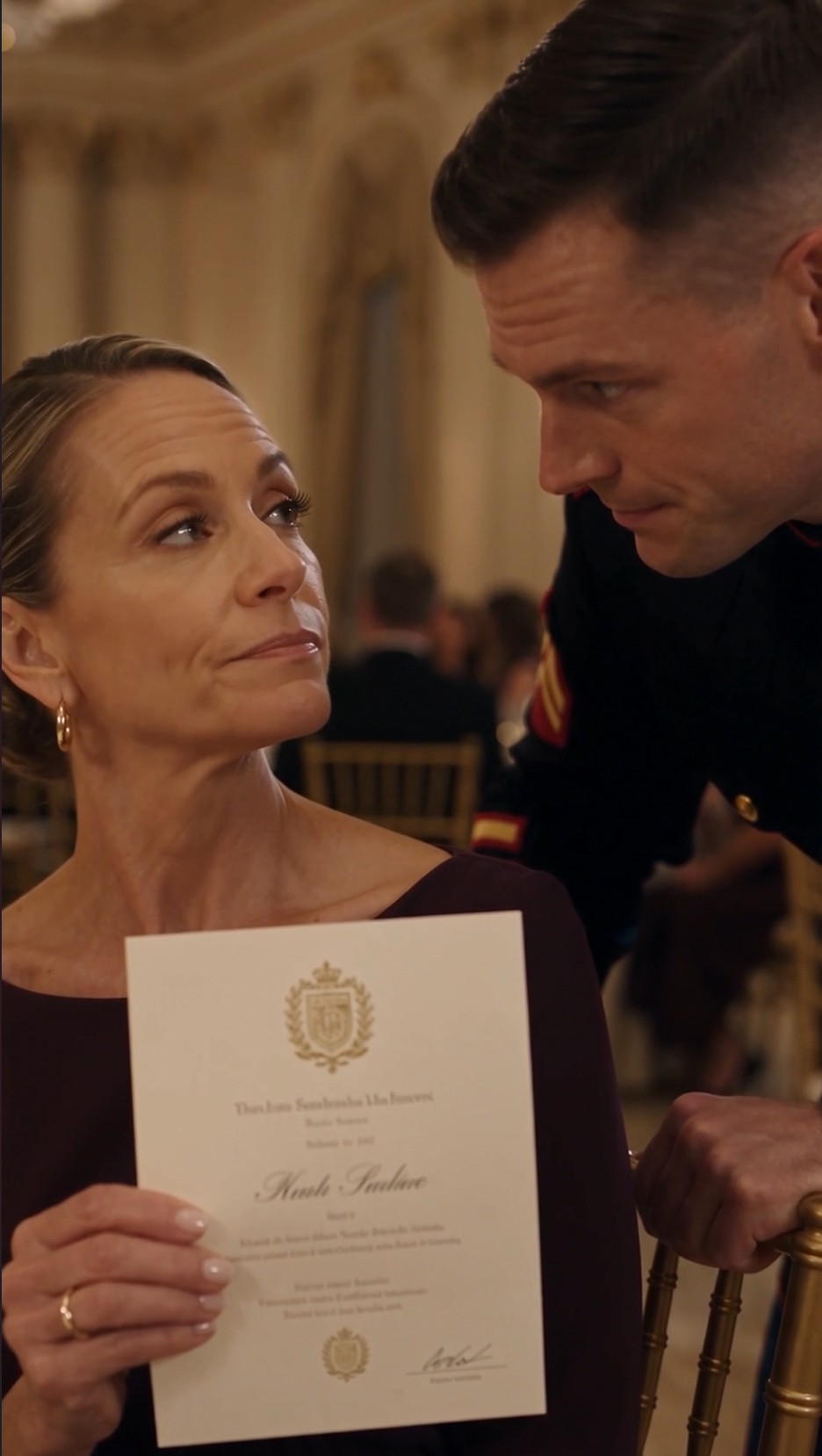
She was on her knees.

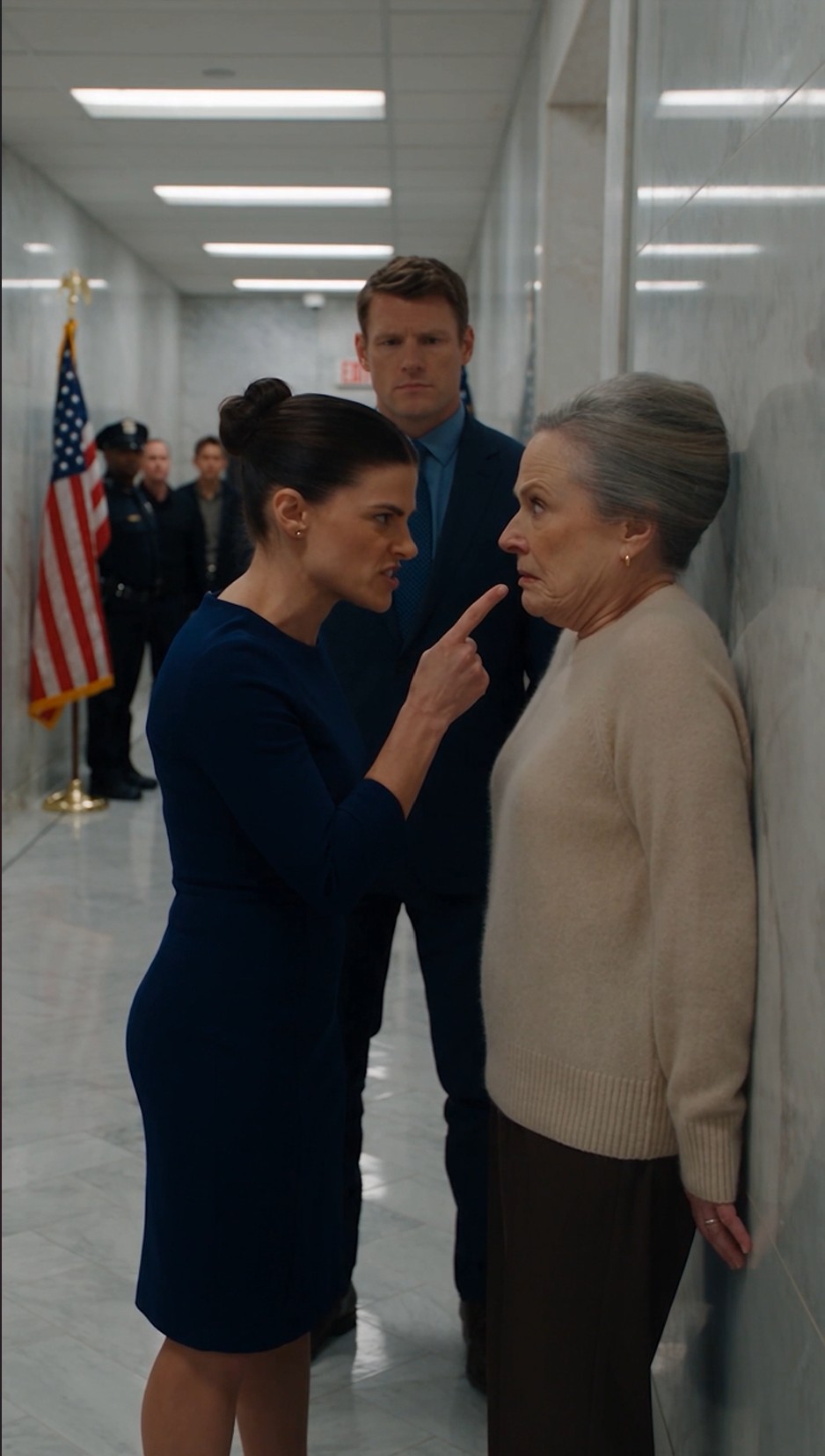
Not in prayer. Not by choice. She was scrubbing the marble floor of a home she had lived in for decades — a home she had raised her children in, cooked thousands of meals in, laughed and cried and grown old in. And the young woman standing over her, arms crossed and expression cold, did not flinch once.
That image — an elderly mother kneeling on her own floor — is the kind of thing that stays with you. It burns. It sits in your chest long after you’ve looked away. Because most people who’ve lived long enough know exactly what it feels like to be made small inside a space that was supposed to be yours.
The hallway was quiet except for the sound of broken breathing.
Then the front door opened.
He stepped in without announcement, without warning — an older man carrying a thick envelope and the kind of stillness that only belongs to someone who has been carrying something heavy for a very long time. He didn’t look at the fiancée first. He didn’t look at his son. His eyes went straight to the woman on the floor, and something in his expression shifted in a way that words can barely capture.
“Stand her up,” he said. His voice was cold — not cruel, but final.
The son, who moments ago had said nothing while his own mother knelt in humiliation, suddenly moved. He rushed to her side with shaking hands and helped her to her feet. She could barely stand. Tears were still running down her face.
The fiancée recovered quickly, the way people do when they’ve had practice spinning situations to their advantage.
“There must be some misunderstanding,” she said. “She told me this house belonged to your son now.”
The older man let out a short, humorless laugh. It wasn’t the laugh of someone who found anything funny. It was the laugh of someone who finally understood exactly how deep the deception ran.
“My son was supposed to protect her,” he said, “not watch her clean her own home on her knees.”
The son looked at the floor.
The fiancée’s face tightened. “You were gone,” she said sharply. “No one even knew if you were coming back.”
That’s when he opened the envelope.
Inside were legal documents — property transfers, notarized pages, signatures, and seals. He held up the first sheet, and the room seemed to hold its breath.
“I transferred every property, every account tied to this house, and every inheritance right into her name before I left,” he said slowly. “Not his. Hers.”
The fiancée went pale.
The son looked as though the floor had shifted beneath him.
The elderly mother covered her trembling mouth.
“I never knew,” she whispered.
The older man’s voice, which had been so hard and measured, softened for the first time when he turned to her.
“Because I wanted to surprise you on our anniversary.”
A gasp broke the silence.
Their anniversary. Not a business arrangement. Not a legal formality. An act of love — planned quietly, carried out with intention, meant to arrive as a gift on a day that mattered.
The son stared between them, confused. “Anniversary?” he whispered.
And then the older man asked the question that cracked the whole story open.
“Did she tell you I was dead?”
The hallway went completely silent.
The son turned slowly toward his fiancée. Her lips parted. No words came out.
The elderly mother’s hand began to shake in a different way now — not from grief, but from the dawning of something almost too painful to absorb.
From the envelope, the older man pulled one more document. Not a deed. Not a transfer. A letter — unopened, returned, addressed to the mother in his own handwriting.
“Every letter I sent from abroad was intercepted and returned,” he said quietly. “Every time I called, I was told she was too ill to speak. Or that the house had already been put in my son’s name.”
The son stepped back as though he had been struck.
He had believed her. He had trusted her. He had stood in that hallway and watched his mother kneel and said nothing — because he had been made to believe a version of reality that was never real at all.
The fiancée had not simply overstepped.
She had constructed an entire architecture of lies — built her place in that household brick by brick on stories she invented, on letters she redirected, on phone calls she controlled. She had made herself indispensable by making everyone else smaller. And she had done it so smoothly, for so long, that the people closest to her hadn’t seen it coming.
The older man looked at her without blinking.
“You made the owner of this house kneel on her own floor,” he said. “And you did it while wearing a ring bought with money that was never yours.”
The fiancée looked desperately at the son.
But he was no longer looking at her the way a man looks at someone he loves. He was looking at her the way you look at someone you realize you never truly knew at all.
Then came the words that closed every door she had opened for herself.
“By morning, your name will be removed from the guest list, the bank access, and this address.”
The fiancée’s composure finally broke.
The elderly mother began to cry again — but differently this time. Not from shame. Not from pain. From relief so overwhelming it had nowhere else to go.
The son reached out and took his mother’s hand.
And the older man looked at her — just her — and said the words she had needed to hear for longer than anyone in that room could fully know.
“No one kneels in your house again.”
Some people spend their whole lives building a home. And some people spend years trying to quietly take it away. But love, when it is real and steady and patient, has a way of finding its way back through the door — at exactly the right moment — to set things right.