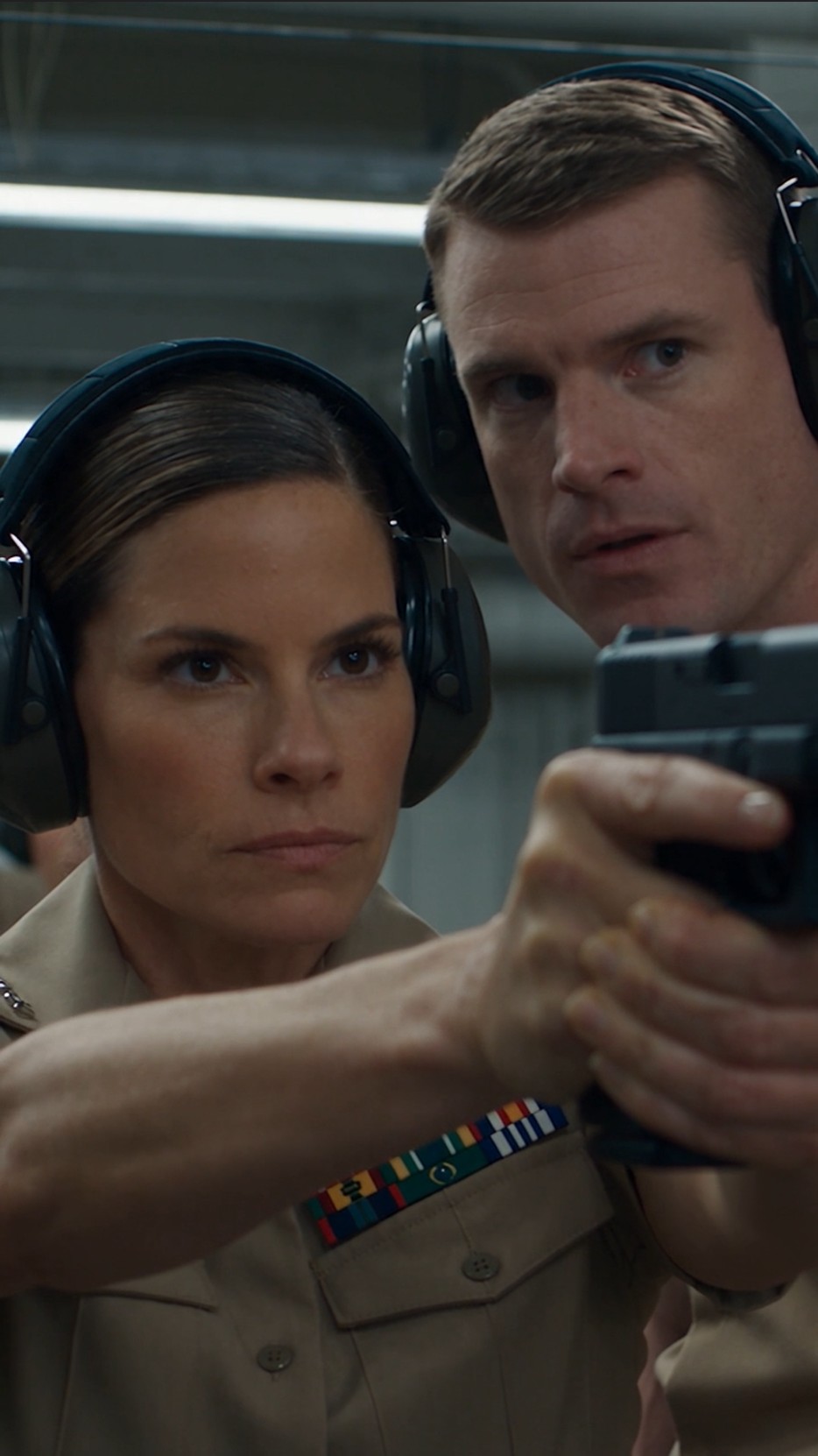
“Ma’am, you need to get up.”
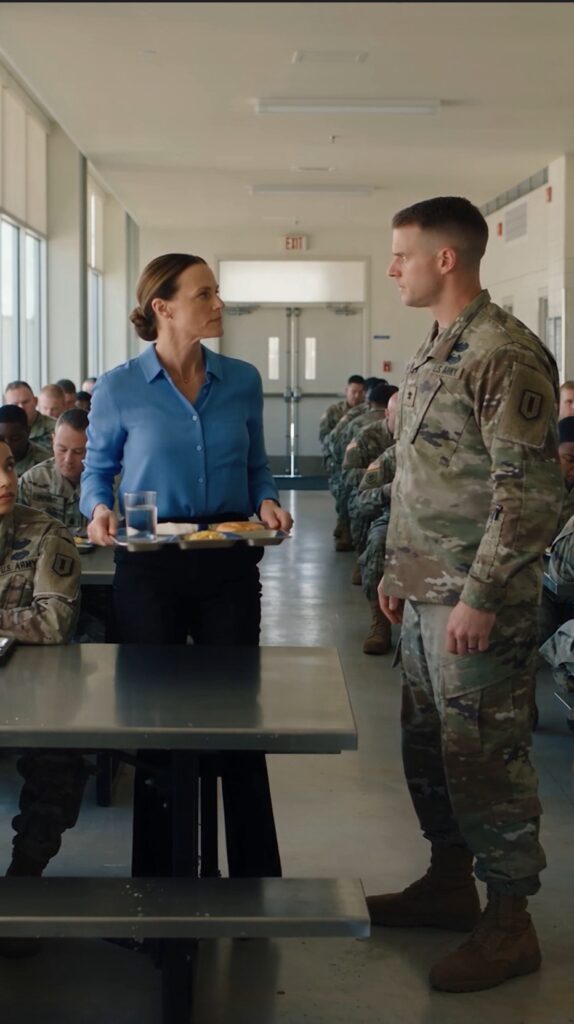
The words cut across the cafeteria loudly enough to quiet three nearby tables. One hand gripped the back of the older woman’s chair, and suddenly a simple lunch felt like something else entirely.
Helen Carter slowly lifted her eyes to Major Ryan Stone.
“Why?”
“This section is for officers.”
Sunlight streamed through the wide cafeteria windows, catching polished tables and uniforms moving through the lunch crowd. Around Helen, conversations continued—but several people were suddenly listening much more carefully.
She stayed seated.
“I was told I could sit here.”
Ryan gave a humorless laugh. “By whom?”
Helen didn’t answer.
Her silence seemed to bother him more than defiance would have.
“You’re in the wrong area.”
Nothing about Helen advertised importance. Silver hair. Plain blue button-down. Dark slacks. Comfortable black shoes.
But there was something in the way she sat—straight-backed, composed, utterly unhurried—that made a young captain two tables away lower his coffee.
Helen reached into her pocket and produced a visitor credential.
“I was invited onto the installation.”
Ryan snatched it before she had fully extended her hand.
He glanced at it.
“A visitor badge doesn’t make you an officer.”
He dropped the credential onto her tray beside the soup.
Heads turned.
Helen studied the badge for a second.
“Did I say it did?”
The cafeteria seemed to shrink around them.
Ryan straightened. “You’re sitting where officers normally eat.”
Helen glanced across the room.
Two lieutenants were eating beside a civilian engineer. Nearby, another officer sat with his teenage son.
She looked back at Ryan.
“Reserved for whom?”
His jaw tightened.
“For people who belong here.”
This time, the silence was unmistakable.
A female lieutenant stopped opening her crackers. Another officer stared down at his phone without moving his thumb.
Helen’s face barely changed.
“Do I not belong here?”
“You’re making this more complicated than necessary.”
“I’m sitting and eating lunch.”
Ryan reached for her tray.
The water glass shuddered as he dragged it toward himself. Helen caught it before it spilled.
“Major.”
There was something different in her voice now.
He ignored it.
“There’s a table near the kitchen.”
Helen followed his pointing hand.
The table sat beside swinging service doors, where workers moved constantly in and out. A rolling trash container waited only a few feet away.
“You want me there?”
“It would be better.”
“For whom?”
Ryan hesitated.
“For everyone.”
Helen stared at him.
Then, unexpectedly, she stood.
She lifted her tray carefully, the visitor badge still resting beside her soup.
Ryan stepped aside.
“Thank you.”
Helen met his eyes.
“Don’t thank me yet.”
She walked away from the sunlight and toward the kitchen.
Gradually, conversations restarted, but quieter now.
Then a chair scraped against the floor.
“Ma’am.”
A young female lieutenant had begun to rise. The name BENNETT was stitched across her uniform.
“Major,” Lieutenant Sarah Bennett said carefully, “maybe she can stay there.”
Ryan turned sharply.
“This doesn’t concern you.”
Sarah glanced toward Helen, who had stopped walking.
“Sir, I only meant—”
“Sit down, Lieutenant.”
Her shoulders stiffened.
“Don’t interfere.”
The command carried across the cafeteria.
Sarah slowly lowered herself into her chair.
Helen watched.
And for the first time since Ryan had approached her table, the calm in her expression changed.
Not into embarrassment.
Not anger.
Something colder.
Her fingers tightened almost imperceptibly around the tray as her eyes settled on the major.
Whatever Helen had been willing to tolerate for herself, watching him silence the young lieutenant had changed something.
And nobody in that cafeteria yet understood what that change was about to mean. 👇
Helen set the tray down.
Not at the table near the kitchen.
On the nearest empty table between herself and Ryan.
The soft click of porcelain against laminate carried farther than it should have.
Ryan turned.
Helen removed the visitor badge from beside her soup, wiped one drop of water from its edge with her thumb, and clipped it carefully back onto her shirt.
Then she looked at Sarah.
“Lieutenant Bennett.”
Sarah froze.
Helen had read her name tape, of course. There was nothing remarkable about that.
Still, the way she said it made Sarah straighten unconsciously.
“Yes, ma’am?”
“Were you trying to help me?”
Sarah glanced at Ryan.
That single glance told Helen more than the answer.
“Yes, ma’am.”
Ryan stepped forward.
“That’s enough.”
Helen did not look at him.
“Thank you, Lieutenant.”
Sarah swallowed.
“You’re welcome.”
Only then did Helen turn toward Ryan.
“You may continue.”
His brow furrowed. “Continue what?”
“Explaining the rule.”
A few forks stopped moving.
Ryan’s face hardened again.
“I already explained it.”
“No. You told me where you wanted me to sit. I’m asking you to identify the rule requiring it.”
Ryan stared at her.
Helen waited.
The service doors swung open behind her with a metallic thump. A kitchen worker pushed through carrying a rack of glasses, noticed the silence, and slowed before disappearing toward the drink station.
Ryan lowered his voice.
“You need to stop making a scene.”
Helen’s eyes remained steady.
“I haven’t raised my voice once.”
His nostrils flared.
“You were instructed to move.”
“Under what authority?”
“I am a major.”
“That is your rank. It wasn’t my question.”
The captain who had lowered his coffee now set the cup down entirely.
Ryan noticed.
Color climbed into his face.
“Ma’am, I am not going to debate cafeteria seating with you.”
“Then don’t.”
Helen picked up her tray again.
For half a second, relief crossed his expression.
Then she carried it back to the original table.
She sat.
The chair legs made a quiet scrape across the floor.
Ryan stared at her.
Helen unfolded her napkin.
“You wanted me to move because you believed I didn’t belong here. Lieutenant Bennett asked you to reconsider. You ordered her not to interfere. I am giving you an opportunity to correct both decisions.”
Ryan’s mouth opened.
Before he could speak, a voice came from behind him.
“Major Stone.”
Ryan turned.
Colonel Daniel Mercer stood at the cafeteria entrance.
He had entered so quietly that almost nobody had noticed him.
Now everyone did.
A folder was tucked beneath one arm. Beside him stood a civilian woman carrying a tablet and wearing an installation identification badge.
Mercer’s gaze moved from Ryan to Sarah, then to Helen.
It stopped.
For one brief instant, the colonel’s professional expression broke.
“Helen?”
Ryan looked back at her.
Helen did not move.
Mercer crossed the room quickly.
“We’ve been looking for you.”
“I gathered there had been some confusion.”
Mercer glanced at the untouched soup, the water glass, and the table near the kitchen.
His face changed.
“What happened?”
Ryan answered first.
“Sir, nothing significant. There was a misunderstanding about seating.”
Helen looked at him.
Ryan’s words slowed.
“She was in an area generally used by officers, and I asked her to relocate.”
Mercer stared at him.
“Why?”
Ryan hesitated.
“Because I believed that was appropriate.”
“Based on what?”
The question landed almost exactly where Helen’s had.
Ryan shifted his weight.
“Sir, I was maintaining order.”
Mercer looked around the cafeteria.
Nobody appeared disorderly.
Nobody was speaking.
His gaze settled on Sarah.
“Lieutenant Bennett?”
Sarah’s face went pale.
Ryan turned toward her too.
For a moment she looked trapped between the two men.
Helen saw her thumb press against the edge of the table.
“Tell him.”
Sarah looked at Helen.
Helen gave no encouraging smile, no reassuring nod.
Only space.
Sarah inhaled.
“Major Stone told Mrs. Carter this section was for officers, sir. Mrs. Carter showed him her visitor badge. He dropped it onto her tray and told her to move to the table beside the kitchen.”
Mercer’s eyes shifted toward the service doors.
Sarah continued, more quietly.
“When I suggested she remain where she was, Major Stone told me it didn’t concern me and ordered me to sit down.”
Ryan’s jaw clenched.
“That is an incomplete characterization.”
Sarah stopped.
Helen saw the old reflex return instantly—the fear of having spoken too much.
Mercer saw it too.
“Then you’ll have an opportunity to provide your complete account, Major.”
Ryan blinked.
“Sir?”
“Not here.”
The civilian woman beside Mercer had not said a word. She was typing something into her tablet now.
Ryan noticed her.
His expression changed.
“Colonel, with respect, this was a routine correction.”
Mercer’s voice remained level.
“I said not here.”
A muscle moved in Ryan’s cheek.
“Yes, sir.”
Mercer turned toward Helen.
“I owe you an apology.”
“No.”
The answer surprised him.
Helen folded her napkin beside the bowl.
“You don’t know enough yet to apologize.”
Mercer became very still.
Helen looked toward Sarah.
“Neither do I.”
That was when the young captain stood.
“Sir.”
Mercer turned.
The captain’s hands remained at his sides, but his shoulders were rigid.
“I saw the entire exchange.”
Ryan’s head snapped toward him.
Another voice followed from the table near the aisle.
“So did I.”
The female lieutenant who had stopped opening her crackers raised her hand slightly.
Then the civilian engineer spoke.
“I did too.”
The room changed.
Not loudly.
That was what made it worse for Ryan.
No one shouted at him. No one accused him. Chairs did not overturn. People simply began to stop pretending they had seen nothing.
Mercer looked around.
“Anyone who witnessed the interaction and is willing to provide a statement, remain available.”
Several people nodded.
Ryan’s face had gone strangely blank.
Helen watched him absorb the shift.
Minutes earlier, the room had belonged to him because everyone else had chosen silence.
Now it didn’t.
Mercer gestured toward the exit.
“Major Stone, with me.”
Ryan stayed where he was.
“Sir, before this becomes something it isn’t, I would like to clarify that I had no knowledge of Mrs. Carter’s identity.”
Helen’s eyes narrowed.
Mercer’s expression hardened.
“That sentence concerns me more than you seem to understand.”
Ryan looked confused.
Helen spoke before Mercer could continue.
“Why would my identity matter?”
Ryan’s lips parted.
“If the rule was legitimate,” Helen said, “you should have applied it regardless of who I was.”
Nobody moved.
“And if the rule wasn’t legitimate, my identity still shouldn’t have mattered.”
Ryan looked at Mercer.
For the first time, he seemed to understand that there was no useful answer.
Mercer pointed toward the door.
“Now.”
Ryan walked.
His shoes struck the polished floor in measured, clipped steps.
At the doorway, he glanced back once.
Not at Helen.
At Sarah.
She flinched.
Helen saw it.
So did Mercer.
“Major.”
Ryan stopped.
Mercer’s voice was quiet.
“You will have no direct contact with Lieutenant Bennett until further notice.”
Ryan’s face drained.
“Yes, sir.”
He disappeared into the corridor.
Only after the doors closed did the cafeteria breathe again.
Mercer pulled out the chair opposite Helen.
“May I?”
Helen nodded.
He sat.
The civilian woman remained standing.
“This is Ms. Elena Park,” Mercer said. “She’s with the installation’s civilian personnel and compliance office.”
Helen looked at Elena.
“We were supposed to meet at thirteen hundred.”
“Yes, ma’am.”
Elena’s eyes moved toward the doorway through which Ryan had left.
“We still can.”
Helen checked the wall clock.
“You’re early.”
“So are you.”
A faint trace of humor touched Helen’s face, but it vanished quickly.
Mercer leaned forward.
“Helen, I need to ask something before we go any further. Did you know Major Stone?”
“No.”
“Had you ever met him?”
“No.”
“Then why did you say, ‘Don’t thank me yet’?”
Sarah looked up.
Helen was silent for several seconds.
“I spent thirty-two years watching people reveal themselves when they believed the person in front of them had no power.”
Ryan’s empty place near the aisle seemed suddenly visible to everyone.
Helen continued.
“I learned not to interrupt too quickly.”
Mercer leaned back.
Sarah stared at Helen.
The answer had not explained everything.
Mercer knew it.
“Helen.”
She looked at him.
“Tell them why you’re here.”
Helen’s gaze traveled across the cafeteria.
Several faces turned away instinctively.
Others remained fixed on her.
She exhaled.
“I was invited to consult on the installation’s leadership climate review.”
The silence returned.
This time it felt different.
Ryan had not displaced a random visitor.
He had demonstrated, in public and without prompting, the exact kind of leadership problem Helen had been asked to help examine.
Sarah’s lips parted.
Helen noticed and shook her head gently.
“Don’t make the mistake he made.”
Sarah frowned.
“What mistake?”
“Thinking my résumé determines whether what happened was wrong.”
Sarah’s eyes dropped.
Helen softened.
“You spoke before you knew who I was.”
Sarah looked back up.
“That matters more.”
Elena Park closed her tablet.
“Mrs. Carter, there’s something you should know.”
Mercer looked at her sharply.
“Elena.”
“She needs to know.”
Helen waited.
Elena glanced toward Sarah.
“This morning was not the first concern involving Major Stone.”
Sarah went rigid.
Mercer’s jaw tightened.
“How many?”
Elena hesitated.
“Enough that we were already reviewing a pattern.”
Helen’s attention moved immediately to Sarah.
The lieutenant’s face had lost color.
“Sarah?”
Sarah stared at the unopened cracker packet.
Her fingers trembled.
“I didn’t file anything.”
Nobody accused her.
That seemed to make the words harder to say.
“I thought about it.”
She pressed her lips together.
“More than once.”
Mercer’s voice softened.
“About Major Stone?”
Sarah nodded.
The cafeteria had emptied around them little by little. People who had agreed to give statements were being directed toward an adjacent conference room.
Helen remained seated.
“What stopped you?”
Sarah laughed once, but there was no humor in it.
“He never did enough at one time.”
Elena’s eyes closed briefly.
Sarah continued.
“A correction in front of people. A schedule change after I disagreed with him. An assignment removed because I was supposedly ‘not ready.’ Then later he’d tell me I was promising. He’d act like he was helping me.”
Her breathing became uneven.
“So every time I tried to explain it to myself, I sounded ridiculous.”
“You don’t sound ridiculous,” Helen said.
Sarah looked at her.
“You sound like someone who was taught to doubt the pattern because each individual piece was small.”
Sarah’s eyes filled.
She looked away immediately.
Mercer sat motionless.
The realization on his face was painful.
“How long?”
“Eight months.”
He swallowed.
“Why didn’t I know?”
Sarah stared at him.
“With respect, sir?”
“Yes.”
“You didn’t ask.”
Mercer took the words without defending himself.
The fluorescent hum filled the silence.
Finally he nodded.
“You’re right.”
Sarah blinked.
Mercer stood.
“Elena, begin formal witness protection measures for Lieutenant Bennett and anyone else who comes forward. Reassign Major Stone’s supervisory authority pending review.”
Elena nodded.
Mercer looked at Sarah.
“And Lieutenant, your assignments will not be changed without independent review while this is ongoing.”
Sarah’s mouth trembled.
“Yes, sir.”
Helen watched Mercer carefully.
“Daniel.”
He looked at her.
“Protection after someone speaks is necessary.”
She paused.
“But if people have to become brave before the system becomes safe, you haven’t solved the problem.”
Mercer’s face tightened.
“No.”
“You’ve merely found better ways to congratulate survivors.”
He absorbed that in silence.
The investigation moved faster after lunch.
Not because Helen demanded it.
Because witnesses began talking.
The captain described Ryan’s treatment of junior officers. The female lieutenant described being publicly humiliated after challenging an inaccurate briefing. A civilian employee produced emails in which Ryan repeatedly altered requirements after work had been completed, then blamed subordinates for failing to meet expectations that had never been communicated.
None of it alone looked dramatic.
Together, it became impossible to dismiss.
By late afternoon, Elena had assembled a timeline.
Sarah sat in a small conference room with Helen beside her.
Outside, rain had begun tapping against the windows.
Sarah held a paper cup of coffee she had not touched.
“There’s something else.”
Helen waited.
Sarah’s thumb rubbed the cardboard seam.
“Three months ago, Major Stone ordered me to revise an evaluation.”
“Whose?”
“A sergeant’s.”
“Why?”
Sarah’s throat moved.
“He said the original rating was too generous.”
“Was it?”
“No.”
Helen did not react.
Sarah stared into the coffee.
“The sergeant had contradicted him during a readiness meeting. Politely. He had documentation showing one of Major Stone’s numbers was wrong.”
“What happened?”
“I changed the evaluation.”
The admission barely came out.
Sarah closed her eyes.
“I told myself it wasn’t my decision. He was my superior. He signed it. But I typed the words.”
Helen remained quiet.
Sarah’s tears came without sound.
“That sergeant lost a competitive opportunity because of it.”
“Do you still have the original?”
Sarah opened her eyes.
“Yes.”
“Do you have the instruction to change it?”
A pause.
“Yes.”
Helen leaned back.
“Then you know what you have to do.”
Sarah nodded.
“I could get disciplined.”
“Yes.”
The answer startled her.
Helen did not soften it.
“Doing the right thing now doesn’t erase what you did then.”
Sarah’s face crumpled.
“But it gives the person you harmed a chance to receive the truth.”
For several seconds, only rain spoke against the glass.
Sarah wiped her cheek.
“Will you come with me?”
Helen looked toward the closed door.
“No.”
Sarah’s eyes widened.
“You don’t need me to tell the truth for you.”
Helen reached across the table and gently pushed the untouched coffee closer to her.
“You already stood up once today.”
Sarah stared at her.
“This time, don’t sit back down.”
Sarah carried the original evaluation and the messages into Elena Park’s office alone.
What followed changed the investigation.
The messages were explicit.
Ryan had instructed Sarah to lower the sergeant’s assessment, then warned her that officers who could not “align with command judgment” often found their careers stalled.
Other records followed.
A former subordinate forwarded saved correspondence.
A civilian analyst produced notes from a meeting she had been afraid to submit months earlier.
The pattern was no longer about temperament.
It was about retaliation.
By evening, Ryan had been formally removed from supervisory duties pending proceedings.
He asked to speak with Mercer.
The request was granted.
Helen was not supposed to be present.
Ryan changed that himself.
When he entered Mercer’s office and saw Helen near the window reviewing notes with Elena, he stopped.
“You.”
Mercer stood.
“Major.”
Ryan ignored him.
“You came here looking for this.”
Helen closed the folder.
“No.”
“You’re conducting a climate review.”
“Yes.”
“And you sat in that cafeteria dressed like that.”
Helen looked down at her blue shirt.
“Dressed like what?”
“Like a civilian.”
“I am a civilian.”
Ryan’s face tightened.
“You knew people wouldn’t recognize you.”
Helen stared at him.
“I didn’t know you.”
“That’s convenient.”
Mercer stepped forward.
“Major Stone, this meeting is about your conduct, not Mrs. Carter’s clothing.”
Ryan laughed bitterly.
“My conduct? I asked someone to change tables.”
“No,” Helen said.
He turned.
“You decided respect had prerequisites.”
Ryan’s eyes flashed.
“You don’t know anything about me.”
“I know you believed I was powerless.”
Helen’s voice remained almost gentle.
“And I know what you did with that belief.”
Ryan stepped toward her.
Mercer immediately moved between them.
“Stop.”
Ryan halted.
The room went still.
Helen could see his breathing now.
Fast.
Shallow.
The authority he had worn so comfortably at lunch was gone, and without it he seemed almost bewildered.
He looked at Mercer.
“I gave twenty years to this uniform.”
Mercer’s expression did not change.
“That does not purchase permission to misuse it.”
“I maintained standards.”
“You altered a subordinate’s evaluation in retaliation.”
Ryan’s face flickered.
“That allegation is unproven.”
Elena placed a printed message on the desk.
Ryan looked at it.
His own words stared back at him.
For the first time all day, he had nothing to say.
Mercer’s voice lowered.
“There are multiple corroborating records.”
Ryan sank into the chair behind him.
The movement was small.
But everyone in the room felt it.
His power did not break with a shout.
It broke when evidence made his explanations irrelevant.
The administrative and disciplinary process that followed took months, not hours.
Helen insisted on that distinction whenever anyone tried to turn the cafeteria incident into a neat story about instant justice.
Real accountability was slower.
Witnesses had to be interviewed.
Records had to be authenticated.
Ryan was given the opportunity to respond.
The retaliatory evaluation was reviewed, along with other personnel decisions connected to his command.
Some allegations could not be substantiated.
Others could.
Enough could.
His supervisory authority never returned.
Formal findings concluded that he had misused his position, retaliated against personnel who challenged him, and exercised leadership in ways inconsistent with required standards.
His career ended under the weight of actions he had once believed were too small to matter individually.
The sergeant’s evaluation was corrected.
The lost opportunity could not simply be recreated, but the record was amended and the harm formally acknowledged.
Sarah received a written reprimand for her role in changing it.
She accepted it.
Then she requested a meeting with the sergeant.
He agreed.
Helen waited outside.
When Sarah emerged forty minutes later, her eyes were swollen.
“He didn’t forgive me.”
Helen nodded.
Sarah looked surprised.
“That’s allowed.”
“I know.”
They walked together down the corridor.
“He said he appreciated that I told the truth.”
“That can be enough.”
Sarah stopped.
“I kept hoping he would tell me I wasn’t responsible.”
Helen looked at her.
“But you were.”
Sarah nodded.
“And so was Ryan.”
Another nod.
“Both things can be true.”
Sarah breathed out slowly.
For the first time, she seemed less frightened by that fact.
Autumn arrived before the climate review was completed.
The cafeteria changed first.
Not dramatically.
There was no plaque.
No ceremony.
The imaginary seating boundaries disappeared because, when investigators searched for them, no written policy supporting Ryan’s claim could be found.
Mercer ordered clearer guest procedures and reporting channels.
More importantly, he began holding monthly small-group meetings without senior supervisors present.
At the first one, almost nobody spoke.
At the second, someone did.
By the fourth, Mercer mostly listened.
Sarah remained on the installation.
For a while, people treated her differently.
Some admired what she had done.
Others knew about the altered evaluation and kept their distance.
She learned to live without controlling either response.
One cold morning, she found Helen standing outside the administration building with two coffees.
“You’re stalking me,” Sarah said.
Helen handed her one.
“I prefer mentoring.”
Sarah smiled.
It was the first time Helen had seen her do it without immediately checking who might be watching.
They sat on a stone bench beneath bare trees.
Sarah wrapped both hands around the cup.
“Why did you really agree to come here?”
Helen looked across the parade field.
“You know why.”
“For the review.”
“Yes.”
“That’s not what I mean.”
Helen was quiet.
A flag snapped in the wind.
Sarah waited.
Finally Helen reached into her coat pocket.
She removed an old photograph.
The edges were worn soft.
Sarah took it.
A much younger Helen stood in uniform beside a group of service members, sunlight bright across all their faces.
Sarah stared.
“You served.”
“Twenty-four years.”
Sarah looked up sharply.
Helen nodded toward the photograph.
“I left active service before you were commissioned.”
“Why didn’t you tell Ryan?”
Helen smiled faintly.
“Why should I have needed to?”
Sarah looked back at the picture.
Then something caught her attention.
A young officer stood beside Helen.
Sarah recognized the face.
“Colonel Mercer?”
“Second lieutenant Mercer.”
Sarah laughed in disbelief.
“He had terrible hair.”
“He did.”
They both laughed.
The sound disappeared into the cold air.
Sarah turned the photograph over.
There was handwriting on the back.
For the ones who speak.
For the ones who cannot yet.
Sarah read it twice.
“When was this written?”
Helen’s smile faded.
“The day I retired.”
Sarah handed the photograph back carefully.
Helen did not put it away.
“There was a lieutenant in my first command,” she said. “Very capable. Very quiet. Her supervisor had a way of punishing disagreement without ever doing anything obvious enough to make a clean complaint.”
Sarah stopped breathing for a moment.
Helen looked toward the field.
“I saw pieces of it.”
“You helped her?”
“Not soon enough.”
The wind moved Helen’s silver hair across her forehead.
“I kept waiting for certainty. I told myself I needed more evidence before I intervened.”
“What happened?”
“She left.”
Sarah’s face fell.
“She had wanted a career. She was good enough for one.”
Helen looked at the old photograph.
“I called her years later and apologized.”
“Did she forgive you?”
“No.”
Sarah stared at her.
Helen’s mouth curved sadly.
“That’s allowed too.”
They sat with that.
Then Sarah looked again at the words on the photograph.
“For the ones who speak. For the ones who cannot yet.”
Helen nodded.
“That lieutenant wrote it.”
Sarah’s eyes widened.
“She gave you this?”
“Yes.”
“After you apologized?”
“Before.”
Sarah did not understand.
Helen turned the photograph over.
“She gave it to me at my retirement ceremony. I didn’t know then that she was leaving because of what had happened.”
Sarah’s eyes filled.
“So you’ve carried it all these years.”
“Yes.”
“Because you failed her?”
Helen considered the question.
“Because she deserved to matter longer than my guilt.”
Sarah looked down.
Helen continued.
“Guilt can become selfish if all it does is keep your eyes on yourself.”
Sarah’s fingers tightened around her coffee.
“The useful question is what you do differently when another person stands in front of you.”
Sarah looked toward the administration building.
Months earlier, she had been afraid to finish a sentence in front of Ryan.
Now junior officers came to her with questions.
Sometimes complaints.
Sometimes mistakes.
She had discovered that leadership was less comfortable when she stopped confusing obedience with trust.
“I think I understand.”
Helen studied her.
“You’re beginning to.”
Winter passed.
Then spring.
Helen’s final report did not mention the cafeteria incident on its first page.
That surprised Mercer.
He found her in his office after reading the draft.
“You buried it.”
“No.”
“It’s on page thirty-seven.”
“That’s where it belongs.”
He set the report down.
“That incident triggered half of this.”
Helen shook her head.
“No. It revealed half of this.”
Mercer sat.
Helen pointed to the report.
“If your lesson is that Major Stone mistreated the wrong visitor, you learned nothing.”
Mercer looked at her for a long moment.
Then he nodded.
“The wrong visitor.”
“Yes.”
He leaned back.
“I’ve thought about what Sarah told me.”
That he had not asked.
Helen waited.
“I thought an open-door policy meant people knew they could come to me.”
“Doors are impressive things.”
Mercer gave her a tired smile.
“You always hated that phrase.”
“I hate architecture being mistaken for leadership.”
He laughed.
Then his expression grew serious.
“I should have seen it.”
“Probably.”
Mercer looked at her.
“You could pretend to comfort me.”
“I could.”
“You won’t.”
“No.”
He nodded.
“Good.”
The report was adopted with changes Mercer had once resisted.
Anonymous reporting procedures were strengthened.
Personnel decisions involving disputed evaluations received additional review.
Junior staff received direct access to mentors outside their immediate chains of supervision.
None of those changes guaranteed courage.
None guaranteed kindness.
Helen refused to promise either.
They simply made silence a little less necessary.
Nearly a year after the lunch that started everything, Helen returned to the cafeteria.
She arrived alone.
Same silver hair.
Same measured walk.
A different blue shirt.
The lunch crowd was loud.
Nobody stopped speaking when she entered.
Helen liked that.
She collected soup, bread, and coffee.
Then she looked across the room.
The table near the windows was full.
So was the table where Ryan had confronted her.
Near the kitchen, the service doors swung open and closed.
One seat remained empty there.
Helen smiled.
She carried her tray toward it.
“Absolutely not.”
She stopped.
Sarah stood three tables away.
Captain’s bars now rested on her uniform.
Helen raised an eyebrow.
“Excuse me?”
Sarah pointed toward the chair opposite her.
“You’re sitting here.”
Helen looked at the crowded table.
A civilian engineer sat on one side.
A young lieutenant sat on the other.
Across from them was the sergeant whose evaluation Sarah had once changed.
Helen’s expression softened.
“Is this section reserved?”
The sergeant nearly choked on his coffee.
Sarah closed her eyes.
“I walked into that.”
“You did.”
Helen joined them.
For several minutes, nobody discussed Ryan.
Nobody discussed investigations.
They talked about ordinary things.
The terrible coffee.
A broken copier.
The sergeant’s daughter learning to drive.
Sarah’s upcoming reassignment.
It felt almost suspiciously normal.
Then the sergeant reached into a folder beside his chair.
“I have something for you.”
Helen frowned.
“For me?”
He slid an envelope across the table.
Helen opened it.
Inside was a copy of the corrected evaluation.
She looked at him.
“I’m not sure I understand.”
“Turn it over.”
Helen did.
Several names had been written across the back.
Sarah’s.
Mercer’s.
Elena Park’s.
The captain who had witnessed the cafeteria confrontation.
The female lieutenant.
The civilian analyst.
Others Helen did not recognize.
Beneath them was one sentence.
For the ones who speak.
For the ones who cannot yet.
Helen stopped moving.
Sarah watched her face.
“How did you know those words?”
Sarah looked confused.
“What?”
Helen turned the page around.
Sarah read the sentence.
“I didn’t.”
The sergeant shook his head.
“Neither did I.”
Helen stared at them.
“Then who wrote it?”
A voice answered from behind her.
“I did.”
Helen’s hand went still.
She knew the voice.
Not from yesterday.
From thirty-three years ago.
Helen turned.
A woman stood several feet away.
Gray threaded through her dark hair now. Fine lines framed her eyes. She carried herself with the composed ease of someone who had stopped asking rooms for permission long ago.
Helen rose slowly.
“Rebecca.”
Sarah looked between them.
Rebecca smiled.
“Hello, Helen.”
For a moment, Helen could not speak.
The cafeteria blurred around her.
The lieutenant from Helen’s first command.
The woman whose career had ended while Helen waited for certainty.
The woman whose handwriting had lived on the back of a photograph for decades.
Rebecca stepped closer.
Helen’s voice broke.
“What are you doing here?”
“Visiting my son.”
She looked toward the sergeant.
Helen followed her gaze.
The corrected evaluation slipped slightly in her fingers.
The sergeant smiled.
“Mom.”
Helen covered her mouth.
Sarah’s eyes widened.
Rebecca’s son.
The man harmed by Ryan’s retaliation was the son of the woman whose experience had shaped Helen’s entire approach to leadership.
The coincidence felt impossible.
Rebecca seemed to read that thought.
“I didn’t know you were involved until he told me about the older woman in the cafeteria.”
Helen laughed once through the tears gathering in her eyes.
“Older?”
Rebecca smiled.
“That was his description.”
The sergeant lifted both hands.
“I said distinguished.”
“You absolutely did not.”
Laughter moved around the table.
Helen could not join it yet.
She was staring at Rebecca.
“I’m sorry.”
Rebecca’s smile disappeared.
“I know.”
“I should have—”
“I know.”
Helen stopped.
Rebecca stepped closer.
“For years, I thought the worst thing that happened was that you didn’t save my career.”
Helen’s eyes dropped.
Rebecca touched her arm.
“Look at me.”
Helen did.
“I was wrong.”
Helen shook her head.
“No.”
“Yes.”
Rebecca’s voice remained steady.
“The worst thing was that I believed what happened to me had disappeared into nothing.”
Helen’s breathing caught.
“Then my son called me.”
Rebecca glanced toward him.
“He told me about a woman who refused to let people decide whether she belonged based on what they thought she was.”
Helen’s tears finally spilled.
Rebecca continued.
“He told me that woman made a lieutenant tell the truth instead of rescuing her from the consequences.”
Sarah looked down.
“He told me that an entire command had started examining the small things people usually dismiss.”
Rebecca looked back at Helen.
“And then he said your name.”
Helen could barely whisper.
“Rebecca…”
“I didn’t forgive you when you called me years ago.”
“I know.”
“I wasn’t ready.”
Helen nodded.
Rebecca’s hand remained on her arm.
“I am now.”
Helen closed her eyes.
The sound she made was small.
Not quite a sob.
Not quite a laugh.
Rebecca pulled her into an embrace.
Helen resisted for only a fraction of a second.
Then thirty-three years of discipline gave way.
She held Rebecca tightly.
Around them, the cafeteria continued.
Trays moved.
Coffee poured.
Service doors swung.
Nobody applauded.
Nobody needed to.
Sarah turned away and wiped her eyes.
Mercer had entered unnoticed near the doorway.
He saw Helen and Rebecca together and stopped.
Elena stood beside him.
Neither interrupted.
Eventually Helen stepped back.
Rebecca touched the old woman’s cheek.
“You carried that photograph?”
“Everywhere.”
“Still?”
Helen reached into her bag.
Rebecca laughed through tears.
“You’re unbelievable.”
Helen handed her the photograph.
Rebecca stared at the younger versions of them.
Then she turned it over.
Her own handwriting remained there.
For the ones who speak.
For the ones who cannot yet.
Rebecca ran her thumb across the faded ink.
“I barely remember writing this.”
“I remember reading it.”
Rebecca looked at her.
“What are you going to do with it now?”
Helen thought for a moment.
Then she handed the photograph to Sarah.
Sarah recoiled slightly.
“No.”
“Yes.”
“I can’t take this.”
“You can.”
“Helen—”
“It was never supposed to be a relic.”
Sarah looked at Rebecca.
Rebecca nodded.
“Take it.”
Sarah held the photograph with both hands.
Her eyes moved across the faces.
“I don’t know what to say.”
Helen sat down.
“That’s convenient. Lunch is getting cold.”
The sergeant laughed.
Rebecca pulled over another chair.
Mercer and Elena joined them a few minutes later after being threatened with permanent exclusion if they tried to turn lunch into a meeting.
No one sat according to rank.
Nobody asked who belonged.
The table became crowded enough that elbows touched and coffee had to be shifted whenever someone reached for bread.
Helen watched Sarah listening to the sergeant.
Not defending herself.
Listening.
She watched Mercer ask Rebecca about the years after she left service and accept the answer without trying to repair history with a speech.
She watched Elena laugh when the kitchen doors nearly struck Mercer as he moved his chair backward.
Ordinary sounds filled the room.
For Helen, that was the beautiful part.
Justice had not restored every lost year.
It had not returned Rebecca’s abandoned career or erase the damage to the sergeant’s record.
It had not transformed Sarah’s mistake into innocence.
It had not made Mercer’s earlier blindness harmless.
Healing had demanded something harder than pretending none of those things happened.
They had remembered.
They had answered.
They had changed what came next.
When lunch ended, people began gathering trays.
Sarah slipped the old photograph carefully into the inside pocket of her uniform.
Helen noticed.
“Don’t lose it.”
Sarah smiled.
“No pressure.”
Rebecca hooked her arm through Helen’s.
“Walk with me?”
Helen looked at the woman she had once failed, then at the son whose injury had somehow brought their lives back into the same room.
“Yes.”
They crossed the cafeteria together.
Near the exit, Helen paused.
The table beside the kitchen was empty again.
Sunlight from the far windows reached across the polished floor, stretching all the way to its edge.
Rebecca followed Helen’s gaze.
“What?”
“Nothing.”
Helen smiled.
Then Sarah called from behind them.
“Helen.”
She turned.
Sarah stood beside the crowded table, one hand resting over the pocket containing the photograph.
“Thank you.”
Helen looked at her for a long moment.
Then she shook her head.
“Don’t thank me.”
Sarah’s smile deepened.
This time, Helen smiled too.
Rebecca squeezed her arm.
They walked through the doors together, into the warm afternoon light, while behind them the cafeteria filled again with voices, uniforms, civilians, visitors, coffee cups, scraping chairs, and people sitting wherever there was room.
And for the first time in a very long while, Helen did not look back.