“Ma’am, if you don’t know how to hold a weapon, stop wasting everyone’s time.”
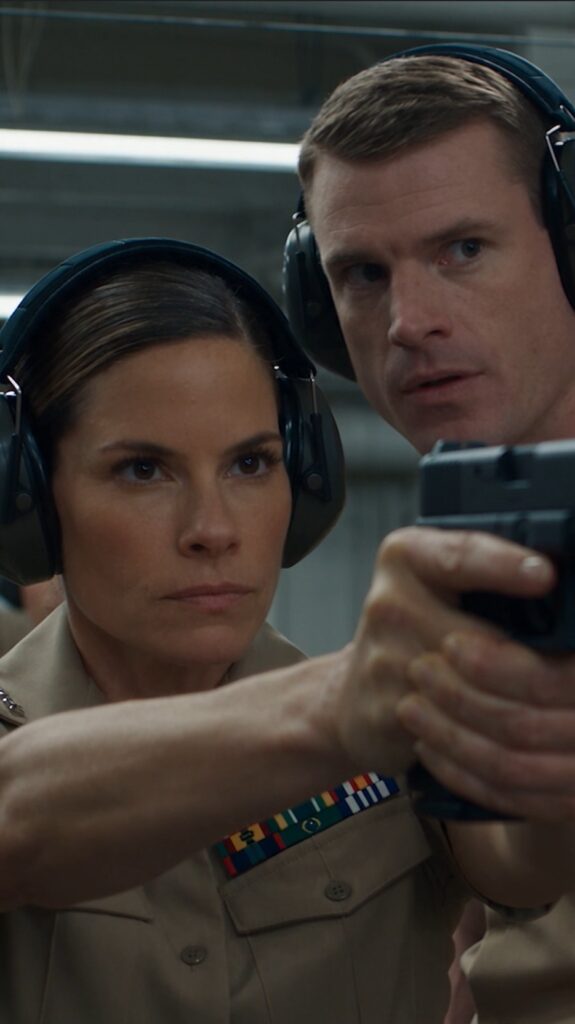
Captain Marcus Stone’s voice carried across the firing line, loud enough to turn every head toward Linda Ward.
Linda did not move.
She kept both hands around the unloaded handgun and continued examining the chamber.
Marcus stepped closer.
“Did you hear me?”
Linda glanced at him.
“I heard you.”
Several soldiers behind them exchanged amused looks.
Marcus noticed.
That seemed to encourage him.
He pointed toward Linda’s hands.
“Then maybe listen before somebody has to clean up your mistake.”
Linda lowered the weapon slightly.
Her silver hair was tied behind her head.
She wore civilian training clothes, plain sneakers, and inexpensive protective glasses.
Nothing about her suggested authority.
Nothing about her impressed Marcus.
He looked her up and down.
“This isn’t some weekend experience package.”
Linda’s expression remained calm.
“I know.”
Marcus gave a short laugh.
“Do you?”
Linda checked the magazine well again.
Marcus watched her fingers.
Then his smile sharpened.
“You’re holding it wrong.”
Linda finally looked directly at him.
“Are you sure?”
That question changed Marcus’s expression.
A few soldiers stopped smiling.
He reached forward without asking.
Marcus took the handgun from Linda’s hands.
“Don’t argue with someone who actually knows what he’s doing.”
He demonstrated his preferred grip.
Linda watched without interruption.
Marcus rotated the handgun slightly.
“Thumb here.”
Linda said nothing.
“Pressure here.”
She continued watching.
“Your wrist needs to stay locked.”
Linda nodded once.
Marcus handed the weapon back.
“Simple.”
A young specialist behind him chuckled.
Another soldier whispered something.
Linda heard it.
Marcus heard it too.
He raised his voice again.
“If the noise scares you, I can have someone drive you back to the visitor center.”
Several soldiers laughed.
Linda looked downrange.
Paper targets hung beneath the bright afternoon lights.
Beyond the covered firing positions, the Colorado sky stretched clear and blue.
The range sat several miles outside Colorado Springs.
Pikes Peak stood faintly against the horizon.
Linda stared toward the target marked for her lane.
Then she looked at Marcus.
“Let me try one string.”
Marcus folded his arms.
“You really want to do this?”
“Yes.”
“Fine.”
He stepped aside.
Then he turned toward the soldiers.
“Everybody watch.”
Linda put on her hearing protection.
Marcus smiled toward the group.
“This is what happens when people don’t understand their limitations.”
Nobody answered.
Linda stepped forward.
She placed her feet carefully.
Marcus watched her stance.
His smile faded for half a second.
Then it returned.
Linda raised the handgun.
Her breathing slowed.
Her shoulders relaxed.
The range officer lifted one hand.
“Shooter ready?”
Linda nodded.
Marcus leaned against the divider.
The signal sounded.
Linda fired.
The first shot cracked across the range.
The handgun settled almost immediately.
She fired again.
Then again.
Her movements were controlled.
There was no hesitation.
There was no wasted motion.
Each recoil returned naturally into the next sight picture.
The soldiers stopped whispering.
Marcus straightened.
Linda continued.
The final shot rang out.
Then silence settled over the lane.
Linda lowered the handgun.
She cleared it carefully.
Marcus stared downrange.
The paper target was still too far away to judge.
Linda placed the weapon safely on the bench.
The target retrieval motor started.
Marcus smirked again.
“Fast doesn’t mean accurate.”
Linda removed one side of her hearing protection.
“I never said it did.”
The target moved closer.
Nobody spoke.
Marcus leaned forward.
The white paper approached the line.
The black scoring rings became visible.
A soldier near the back whispered, “No way.”
Marcus stopped breathing for a moment.
The target reached them.
Almost every round had landed inside a tight cluster.
The pattern sat near the center.
It looked less like random holes and more like a deliberate signature.
Marcus stared.
His mouth tightened.
One soldier stepped closer.
Another lowered his hearing protection.
Linda remained still.
Marcus searched the target for something to criticize.
His finger finally rose toward one hole sitting barely outside the cluster.
“There.”
The word came too quickly.
Marcus touched the paper beside the mark.
“You pulled that one.”
Linda studied the target.
“Yes.”
The simple agreement seemed to unsettle him more than an argument would have.
Marcus turned toward her.
“You know you pulled it?”
“I knew when it broke.”
The young specialist who had laughed earlier looked from Linda to Marcus.
Nobody smiled now.
The range officer stepped closer to the target and examined the group. He did not say anything at first. The motor behind the carrier clicked softly as it cooled.
Marcus folded his arms again.
“One decent string doesn’t prove anything.”
Linda removed the rest of her hearing protection.
“I didn’t come here to prove anything.”
“Then why are you here?”
The question hung between them.
Linda looked at him for several seconds.
Before she could answer, footsteps sounded behind the firing positions.
They were measured, unhurried.
Marcus glanced over his shoulder.
A colonel in uniform was walking toward the lane.
The shift in Marcus was immediate.
His shoulders squared. His chin lifted. The irritation vanished from his face and was replaced by the controlled expression of a man who had suddenly remembered he was being observed.
“Colonel.”
Colonel David Mercer stopped beside the bench.
His eyes went first to the cleared handgun.
Then to the target.
Then to Linda.
“Mrs. Ward.”
Linda gave him a small nod.
“Colonel.”
Marcus’s eyes moved between them.
Mercer looked at the target again.
“You still pull one left when you rush the last transition.”
For the first time all afternoon, Linda smiled.
Barely.
“I’m getting old.”
Mercer’s mouth moved at one corner.
“You’ve been saying that for fifteen years.”
The silence behind Marcus changed.
It was no longer surprise.
It was attention.
Marcus looked at Linda again, as if the plain civilian clothes and inexpensive glasses might rearrange themselves into an explanation.
“Sir,” he said carefully, “you know her?”
Mercer’s expression settled.
“Yes.”
Nothing more.
Marcus waited.
When Mercer did not elaborate, Marcus gave a small laugh that sounded forced.
“Mrs. Ward was having some difficulty with basic handling. I was just correcting—”
“No.”
The word was quiet.
Marcus stopped.
Mercer looked directly at him.
“You were humiliating her.”
The firing line became still enough that the faint flap of the paper target in the breeze could be heard.
Marcus’s face reddened.
“Sir, with respect, I was maintaining safety standards.”
“Safety standards require you to correct unsafe behavior.”
Mercer glanced toward Linda.
“She wasn’t behaving unsafely.”
Marcus opened his mouth.
Mercer continued.
“They do not require an audience. They do not require ridicule. And they certainly do not require you to take a cleared firearm from a shooter’s hands without permission merely because you want to demonstrate superiority.”
Marcus’s jaw tightened.
Linda watched him.
There was no satisfaction in her face.
That made it worse.
“Sir, I believed her grip was improper.”
Linda finally spoke.
“You believed it looked unfamiliar.”
Marcus turned toward her.
She held his gaze.
“Those aren’t the same thing.”
The young specialist lowered his eyes.
Marcus looked toward the soldiers, perhaps hoping to find some trace of the earlier laughter.
There was none.
Mercer stepped toward the target.
“Captain, do you recognize this drill?”
Marcus looked at the holes.
“A controlled cadence exercise.”
“Which version?”
Marcus hesitated.
Mercer waited.
“I’m not sure.”
Linda reached for the target and gently steadied the bottom edge where the breeze kept moving it.
“Modified Ward transition drill,” she said.
The specialist at the back looked up sharply.
Marcus stared at her.
Mercer said nothing.
Recognition came slowly.
Not to Marcus first.
To one of the older soldiers standing two lanes away.
He leaned forward.
“Ward?”
Linda’s eyes moved toward him.
The soldier looked at the target, then back at her.
“The Ward transition?”
Marcus’s expression changed again.
The name was familiar.
He had simply never attached it to a person.
Mercer did it for him.
“Linda Ward helped develop the original training sequence.”
Nobody moved.
Marcus looked down at the handgun on the bench.
Then at Linda’s hands.
The same hands he had repositioned.
The same wrists he had told her to lock.
His face lost color.
Linda’s gaze drifted toward the mountains beyond the range.
For a moment, the firing line disappeared from her attention.
The clear Colorado afternoon seemed to hold something older for her.
Something heavier.
Mercer understood.
His voice softened.
“She was also one of the instructors who helped rebuild this installation’s advanced handgun program after the old curriculum was retired.”
Marcus swallowed.
Linda looked back.
“That was a long time ago.”
“How long?” the specialist asked before catching himself.
Linda did not seem offended.
“Long enough that most of you were still in school.”
A few faces shifted.
Marcus tried to recover.
“Mrs. Ward, I wasn’t aware of your background.”
“I know.”
“I would have handled this differently if—”
Linda’s eyes sharpened.
“If you knew who I was?”
Marcus stopped.
That sentence landed harder than anything Mercer had said.
Linda stepped closer, not aggressively, but enough that Marcus could no longer address the uniform around her instead of the woman herself.
“That’s the problem, Captain.”
Her voice stayed low.
“You shouldn’t have needed my résumé to decide whether I deserved basic respect.”
Nobody looked away.
Marcus’s throat moved.
Linda continued.
“If I had been exactly who you thought I was—a sixty-something civilian with no experience, nervous around a handgun—what would your behavior have accomplished?”
Marcus said nothing.
“Would I have become safer?”
Silence.
“Would I have learned faster?”
Still nothing.
“Or would I have gone home embarrassed enough to never ask another question?”
The young specialist shifted his weight.
Linda noticed.
She turned slightly toward the soldiers.
“A beginner who asks a foolish question can be taught. A beginner who becomes afraid to ask questions can become dangerous.”
Her gaze returned to Marcus.
“Humiliation is not instruction.”
The words stayed in the air.
Mercer looked toward the range officer.
“Cease training on this line.”
Marcus’s head turned.
“Sir?”
“Everyone clears and steps back.”
The range officer gave the command.
Magazines came out.
Slides locked open.
Weapons went to benches.
The sounds were precise and mechanical, but the mood had changed completely.
Mercer faced Marcus.
“Captain Stone, you’re relieved from instructional duties pending review.”
Marcus blinked.
“Sir, over this?”
Mercer’s expression hardened.
“Over a pattern.”
Marcus looked stunned.
Mercer continued before he could answer.
“This isn’t the first complaint.”
That was the moment Linda’s composure shifted.
Only slightly.
She looked at Mercer.
Marcus saw it.
“What complaints?”
Mercer did not raise his voice.
“Three written. Several informal.”
Marcus stared at him.
“From who?”
“People you trained.”
“They were weak shooters.”
A soldier behind him inhaled.
Marcus seemed to hear himself only after the sentence had already escaped.
Mercer’s face became very still.
“That response is going in the report.”
Marcus looked around.
The firing line that had felt like his stage minutes earlier had become a room without walls, filled with witnesses.
“Sir, you know how training works. You push people. You find out who can handle pressure.”
Linda’s fingers tightened once around the edge of the paper target.
Then relaxed.
“There’s pressure,” she said, “and there’s contempt.”
Marcus turned toward her.
“You don’t know how I train.”
“No.”
Linda’s voice was almost gentle.
“But I know what contempt looks like.”
For the first time, Marcus had no answer.
Mercer motioned toward the administration building beyond the range.
“Captain. With me.”
Marcus did not move.
His eyes went to Linda.
Anger appeared there now, but beneath it was something more vulnerable.
Fear.
“You came here for this.”
Linda frowned.
“You knew there were complaints.”
“No.”
“You knew Mercer.”
“Yes.”
“So this was some kind of test.”
Linda looked at him for a long moment.
“No.”
Marcus laughed once, bitterly.
“You expect me to believe you just happened to show up?”
“I came because I was invited.”
“By him?”
“No.”
That stopped Mercer too.
Linda looked down at the target in her hand.
Then she folded it carefully along its existing crease.
“I came because of Daniel.”
The name seemed to take something out of her voice.
Mercer’s expression softened.
Marcus looked confused.
Linda placed the folded target on the bench.
“My husband.”
Nobody spoke.
“He died eleven months ago.”
The wind moved through the open side of the range.
Somewhere farther down, a loose strap tapped softly against a divider.
Linda rested her palm on the bench.
“He spent thirty-two years teaching people how to handle weapons safely. He believed the first responsibility of an instructor was not marksmanship.”
She paused.
“It was trust.”
Mercer lowered his eyes.
Linda continued.
“Daniel used to bring me here after the official training days ended. We argued about drills. Timing. Foot placement. Transitions. Half the time we disagreed until midnight.”
A faint smile touched her face and disappeared.
“He loved this place.”
Marcus’s anger had gone quiet.
Linda looked toward the mountains again.
“Before he died, he asked me to come back once.”
Mercer watched her.
“You never told me that.”
“I didn’t tell anyone.”
“Why today?”
Linda reached into the side pocket of her range bag.
She removed a small, worn notebook.
The cover had softened at the corners from years of use.
She held it without opening it.
“Today would have been our fortieth anniversary.”
Nobody on the firing line moved.
Marcus looked at the notebook.
Linda’s thumb rested against its faded edge.
“He left this in the drawer beside his bed.”
She opened it.
Most of the pages were filled with compact handwriting, range diagrams, timing notes, and corrections made in different inks.
Near the back, a folded sheet had been tucked between two pages.
Linda unfolded it.
Mercer recognized the handwriting immediately.
His breath changed.
“What is that?”
“His last training proposal.”
Linda handed it to him.
Mercer read silently.
His eyes slowed near the bottom.
Marcus stood several feet away, forgotten for a moment.
Then Mercer looked up.
“He wanted the instructor course changed.”
Linda nodded.
“Not the shooting standards. The teaching standards.”
Mercer read another line.
Linda spoke quietly.
“He thought instructors were becoming too focused on performance and not enough on whether students trusted them enough to admit mistakes.”
The specialist who had laughed earlier stared at the concrete.
Linda noticed him.
“What’s your name?”
He looked up.
“Specialist Ryan Cole, ma’am.”
“You laughed.”
His face reddened.
“Yes, ma’am.”
“Why?”
Ryan swallowed.
“I don’t know.”
Linda waited.
He looked toward Marcus, then away.
“Because Captain Stone laughed.”
The admission was painfully quiet.
Linda nodded.
“That’s usually how it starts.”
Ryan’s eyes lifted.
“I’m sorry.”
“I believe you.”
He seemed surprised.
Linda folded Daniel’s note again.
“Remember how easy it was.”
Ryan nodded.
Marcus looked toward Mercer.
“Sir, I made a mistake.”
Mercer’s expression did not change.
Marcus drew a breath.
“I shouldn’t have spoken to her that way.”
Linda studied him.
Marcus corrected himself.
“I shouldn’t have spoken to anyone that way.”
For a moment, there was only wind.
Then Mercer said, “Come with me.”
Marcus followed.
He made it three steps before Linda spoke.
“Captain.”
He stopped.
She walked to him and held out the folded target.
Marcus stared at it.
“I don’t want that.”
“I think you should take it.”
His eyes narrowed.
“Why?”
“So you remember the wrong lesson.”
He looked at her.
Linda tapped one finger lightly against the paper.
“You’re going to want to remember that I embarrassed you with a better group.”
Marcus’s jaw flexed.
“That isn’t what happened.”
“Good.”
She held the target closer.
“Then remember what did.”
Slowly, Marcus accepted it.
The paper looked strangely fragile in his hand.
Linda stepped back.
“You decided what I was before I fired a shot.”
Marcus looked at the tight cluster.
Then he folded the target once more and held it at his side.
This time, he did not answer defensively.
“Yes.”
Mercer led him away.
The soldiers remained near the firing positions.
Nobody seemed sure whether training was over or whether they were supposed to speak.
Linda began packing her range bag.
Ryan approached her.
“Mrs. Ward?”
She looked up.
“Would you show me the grip?”
Linda glanced at his hands.
“The one Captain Stone said was wrong?”
Ryan gave an embarrassed half smile.
“The one you actually use.”
Linda looked at him for a second.
Then she closed her bag again.
“Pick up the cleared weapon.”
Ryan did.
Linda stood beside him rather than in front of him.
“First,” she said, “show me what feels natural.”
He positioned his hands.
She watched.
She did not touch him.
She did not laugh.
She did not call the others over.
“Good,” she said. “Now tell me where you feel tension.”
Ryan pointed with his thumb.
Linda adjusted one detail.
Then another.
Within minutes, several soldiers had drifted closer.
Linda noticed but did not acknowledge the growing semicircle.
She kept teaching Ryan as though he were the only person there.
When he finally raised the unloaded handgun toward the target, his shoulders were lower.
“Better?” he asked.
“You tell me.”
He tested the position.
“Yes.”
“Then remember why.”
By the time Colonel Mercer returned, nearly the entire group was listening.
He stopped several yards away.
Linda saw him but continued.
Mercer did not interrupt.
For almost an hour, she worked through the old drill with them.
Not as a performance.
Not as a legend returning.
Just as an instructor.
She asked questions before giving corrections.
When someone made a mistake, she made them repeat the movement slowly until they could identify the problem themselves.
When Ryan rushed a transition and threw a round wide, he flinched and looked toward her.
Linda examined the target.
“What did you feel?”
“I pushed.”
“When?”
“Right before the shot.”
“Good.”
Ryan blinked.
“Good?”
“You recognized it.”
She handed him another magazine.
“Now fix it.”
His next group tightened.
A smile escaped him.
Linda smiled too.
Late afternoon light stretched across the concrete by the time the final weapon was cleared.
The soldiers began leaving in small groups.
Several thanked Linda.
Ryan lingered.
“Are you coming back?”
Linda looked toward Mercer.
He was standing near the entrance with Daniel’s proposal in his hand.
“I don’t know.”
Ryan nodded, disappointed but respectful.
“Thank you anyway.”
He started to leave.
“Ryan.”
He turned.
Linda pointed toward the firing line.
“Next time someone new stands where I stood today, what are you going to do?”
Ryan understood.
“Make sure they don’t stand there alone.”
Linda nodded.
“That’ll do.”
He walked away.
Mercer approached.
The sunlight had softened, turning the distant mountains blue-gray.
“I read all of it,” he said.
Linda zipped her bag.
“And?”
“Daniel was right.”
“He usually enjoyed hearing that.”
Mercer laughed softly.
Then his face grew serious.
“The review on Stone will be formal. I meant what I said. There are prior complaints.”
Linda’s hands stopped.
“What happened to those people?”
“Two transferred sections. One left the advanced course.”
Linda looked toward the empty lanes.
Mercer’s voice lowered.
“I should have caught it earlier.”
“Yes.”
He accepted the answer without flinching.
Linda picked up her bag.
Mercer looked at Daniel’s notebook.
“Can I borrow this?”
Her grip tightened around the strap.
For eleven months, the notebook had remained beside her bed.
Sometimes she had opened it at two in the morning just to see Daniel’s handwriting.
Sometimes she had been unable to touch it for weeks.
Mercer seemed to understand what he was asking.
“Only if you’re ready.”
Linda looked at the worn cover.
Then she handed it to him.
“Bring it back.”
“I will.”
The formal review lasted six weeks.
Linda did not attend most of it.
She gave one statement.
She refused every suggestion that Marcus’s treatment of her should matter more because of who she was.
Her written statement ended with one sentence.
If his conduct would have been acceptable toward an inexperienced civilian, then my experience is irrelevant.
It became the line Mercer returned to repeatedly.
Other people began talking.
A lieutenant described being mocked after asking for additional instruction.
A young soldier admitted he had concealed a wrist problem because Marcus had publicly ridiculed another trainee for requesting an adjustment.
A civilian employee described leaving the range in tears after Marcus used her missed shots as entertainment for the group.
None of the incidents alone looked dramatic on paper.
Together, they formed the pattern Mercer had named.
Marcus was removed permanently from instructional duty.
The decision cost him the position he had built his identity around.
More importantly, the review required him to face every documented complaint rather than dismissing each one as weakness.
He appealed.
The appeal failed.
He requested reassignment.
It was granted, but not to another training command.
On his final morning at the range, Marcus stood alone beside the lane where he had met Linda.
The place was empty.
He opened his locker.
Inside, folded behind a manual, was the paper target Linda had given him.
He unfolded it.
The tight group remained in the center.
One hole sat slightly left.
Marcus stared at that imperfect shot longer than the others.
Then he turned the target over.
Weeks earlier, he had written something on the back.
You decided what she was before she fired a shot.
He read the sentence twice.
When he finally folded the target again, he did not throw it away.
Three months later, Linda received a letter.
She recognized Marcus’s name on the return address and nearly left it unopened.
It sat on her kitchen table through breakfast.
Then lunch.
Rain moved against the windows that evening.
Finally, Linda opened it.
The letter was short.
Marcus did not ask forgiveness.
He did not explain himself.
He wrote that the review had forced him to listen to people he had spent years labeling as too sensitive, too slow, too weak, or unprepared.
Then came one sentence that made Linda put the page down.
I thought making people afraid of disappointing me made them stronger.
She stared at Daniel’s empty chair across the kitchen.
Rain traced the glass.
After a while, she picked up the letter again.
Marcus wrote that he had begun working with junior personnel in his new assignment.
No weapons.
No firing line.
Mostly logistics and inventory.
He said the work had taught him something humiliatingly simple: people asked more questions when they were not afraid of the answer they would receive.
At the bottom, he had written:
I’m sorry I needed to know who you were before I understood how I should have treated you.
Linda folded the letter.
She did not write back that night.
Or the next.
A week later, she mailed him a single sheet of paper.
There were only four words beneath his name.
Now teach someone else.
Winter came early to Colorado Springs.
Snow covered the shoulders of Pikes Peak and gathered in pale strips beside the roads.
One December morning, Mercer called Linda.
“I have something of yours.”
Daniel’s notebook.
Linda drove to the installation.
When she entered the training building, she expected to find Mercer alone.
Instead, voices came from the classroom.
She stopped outside the open door.
Ryan stood at the front.
A dozen soldiers sat behind desks.
On the screen was a slide with four words.
TRUST BEFORE PERFORMANCE.
Linda did not move.
Mercer appeared beside her.
“He volunteered for the instructor-development pilot.”
She looked at him.
“What pilot?”
Mercer handed her Daniel’s notebook.
Then he opened the classroom door wider.
On the next slide was a scanned page in Daniel’s handwriting.
Linda’s breath caught.
The room blurred for a second.
At the top of the page, Daniel had written:
WARD INSTRUCTOR STANDARD — DRAFT.
Linda looked at Mercer.
“You did this?”
“No.”
He shook his head.
“Daniel did.”
She frowned.
Mercer opened the notebook to the inside back cover.
There was a pocket Linda had never noticed.
Inside it sat a sealed envelope.
Her name was written across the front.
Linda stopped breathing.
“That wasn’t there.”
“It was.”
Mercer’s voice softened.
“The binding had separated while we were scanning the notebook. The envelope was tucked behind the lining.”
Linda touched her name.
Daniel’s handwriting.
For nearly a minute, she could not open it.
Mercer stepped away and gave her space.
Her fingers finally broke the seal.
Inside was one page.
Lin,
If you’re reading this, somebody finally took this battered notebook apart, which means you probably gave it away long enough for someone else to learn from it. I knew you would, eventually.
Linda covered her mouth.
She kept reading.
You always thought the drills were the part of our work worth preserving.
They weren’t.
You were.
Not because you could shoot better than most of us, although you’ll enjoy hearing that I admitted it.
A broken laugh escaped her.
Ryan turned at the sound from inside the classroom but did not interrupt.
Linda read on.
You were the instructor people came back to after they had failed because you never made failure feel like a verdict on who they were.
That is the standard.
If this program ever carries our name, make sure it means that.
Not speed.
Not accuracy.
Not ego.
Trust.
And Lin—if you came back to the range, even once, then you kept the promise.
Go home.
You’ve done enough.
Love,
Daniel
Linda lowered the letter.
For eleven months, grief had felt like a door she had been standing beside without knowing whether she was allowed to close it.
Now, in a fluorescent hallway outside an ordinary classroom, something inside her finally loosened.
Mercer looked away to give her privacy.
Linda wiped beneath one eye.
“He knew.”
Mercer nodded.
“He knew you.”
Inside the classroom, Ryan was speaking.
“The student should never have to earn the instructor’s respect before instruction begins.”
Linda looked through the doorway.
The young specialist who had laughed at her was teaching Daniel’s lesson.
Not perfectly.
Not dramatically.
But sincerely.
Mercer handed Linda a second document.
At the top was the official designation for the revised instructor-development program.
The Daniel and Linda Ward Instruction Standard.
Linda stared at it.
“No.”
Mercer smiled.
“That was my reaction too.”
“I mean take my name off.”
“We tried.”
“We?”
“The committee.”
Linda looked horrified.
“There was a committee?”
“Several.”
Despite herself, she laughed.
Mercer continued.
“Daniel anticipated you.”
He pointed toward a handwritten note reproduced at the bottom of the proposal.
Linda read it.
If Linda objects to having her name attached, remind her she wrote half of this and corrected the other half.
Her eyes closed.
“That man.”
Mercer smiled.
“Still winning arguments.”
Linda pressed the letter gently against her chest.
Through the classroom doorway, Ryan noticed her.
He stopped speaking.
The others turned.
Linda expected them to stand.
Nobody did.
Ryan had apparently learned something else.
He simply smiled.
“Mrs. Ward.”
Linda stepped into the room.
Ryan gestured toward the empty chair at the back.
“We’re discussing how an instructor corrects someone without making the correction about themselves.”
Linda looked at the slide.
Then at Daniel’s handwriting.
Then at the students waiting without performance or ceremony.
“Sounds useful.”
Ryan smiled.
“We could use another opinion.”
Linda walked to the empty chair.
She sat down.
“Go on.”
Spring arrived slowly.
The snow withdrew from the lower slopes.
The range reopened beneath a bright Colorado sky.
Linda returned twice a month.
Never more.
She refused an office.
She refused a title beyond her name.
Sometimes she demonstrated.
More often she watched.
Ryan became one of the first instructors certified under the revised standard.
On the morning he passed his evaluation, his final student was a nervous civilian woman in her late fifties who kept apologizing for her grip.
Ryan stood beside her.
She missed twice.
Her face reddened.
“I’m sorry.”
Ryan shook his head.
“Nothing to apologize for.”
She looked at him uncertainly.
“I’m holding it wrong.”
Ryan glanced toward Linda.
She stood several lanes away.
Their eyes met.
He turned back to the woman.
“Show me what feels natural.”
Linda smiled.
She picked up her range bag and quietly walked toward the parking lot.
No one called her back.
No one needed to.
That evening, she drove home with the windows cracked open.
The air smelled of pine and thawing earth.
Daniel’s letter rested in the glove compartment.
His notebook was back beside her bed.
Marcus’s letter remained in the kitchen drawer.
She had kept that too.
Not because every wound needed preserving.
Because some things deserved to be remembered accurately.
At home, sunlight stretched across the kitchen floor.
Linda put water on for tea.
For almost a year, she had automatically reached for two cups before catching herself.
That evening, her hand moved toward the second cup again.
She stopped.
For once, the mistake did not break her.
Linda smiled.
She took the second cup from the cabinet anyway.
It had been Daniel’s favorite—dark blue, chipped near the handle.
She set it across from her.
Then she carried her own tea to the table and opened the window.
Somewhere beyond the houses, too distant to be sharp, came the faint rhythm of training fire from the range.
Linda listened.
A shot.
A pause.
Another shot.
No shouting.
No laughter at someone else’s expense.
Just the measured sound of people learning.
She reached across the table and rested two fingers against the chipped blue cup.
“You were right,” she whispered.
The room remained quiet.
Linda looked toward the mountains glowing in the last light, and for the first time since Daniel died, the silence beside her did not feel empty.
It felt peaceful.
It felt earned.
And as the evening sun slipped behind Pikes Peak, Linda sat beside the open window with Daniel’s cup across from her, listening to a distant firing line where nobody had to be humiliated before they were allowed to learn.






