My mother-in-law had been planning her Mediterranean cruise for months.
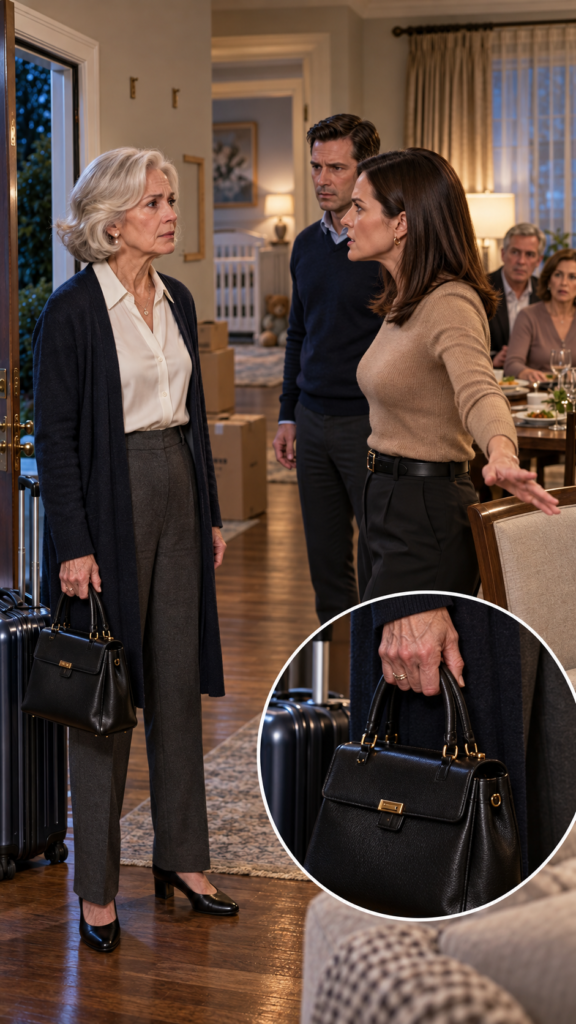
She was finally going to enjoy herself. Ten days. Greece. Italy. France. She even joked: “Maybe I’ll come home and discover you’ve all learned how to survive without me.” Her daughter-in-law laughed. “We’ll take good care of the house.” But she had a completely different plan. Two days after the cruise ship left port, moving trucks arrived. By the end of the afternoon, her daughter-in-law had moved her entire family into the house. She replaced the curtains. Changed the furniture. Moved her mother-in-law’s belongings into the garage. Then she changed the locks. She even took down the nameplate beside the front door. Her husband asked: “Are you sure this is okay?” She smiled. “She’ll never do anything.” Then she posted a picture online. “Finally, our own home.” Her mother-in-law saw the post from the cruise ship. She didn’t respond. Instead, she took a screenshot. Then another. And another. When she returned home, she didn’t knock. She stood outside and watched her daughter-in-law’s parents having dinner in her dining room. Then she called her son. “Open the door.” He froze. “Mom?” “Yes.” “But you’re not supposed to be back until Friday.” “I know.” There was a long silence. Then he opened the door. His mother walked inside. She looked around. Her furniture was gone. Her paintings had been removed. Her bedroom had become a nursery. She calmly asked: “Who gave you permission to do this?” Her daughter-in-law stepped forward. “You were gone.” “That wasn’t an answer.” “This is our home now.” The mother-in-law smiled. “Interesting.” She pulled an envelope from her handbag. “I was going to give this to you when I returned.” Her daughter-in-law opened it. Inside was a property appraisal. Then another document. Then another. Her smile disappeared. The mother-in-law quietly said: “I sold the house while I was on vacation.” Her daughter-in-law stared at her. “You can’t!” “I already did.” “Who bought it?” The mother-in-law looked toward the front door. “Actually…” A car had just pulled into the driveway. “The new owner is here.” Everyone turned toward the window. The person stepping out of the car was someone the daughter-in-law knew very well. Her own father.
The front door opened before anyone found the courage to speak.
Her father stepped inside, closed the door behind him, and stood for a moment beneath the entry light. He looked first at his daughter, then at the papers trembling in her hands, then at the older woman standing beside the suitcase she had not even been allowed to carry upstairs.
“Dad?”
He did not answer immediately.
The daughter-in-law glanced toward her mother at the dining table, searching for some sign that this was a misunderstanding. Her mother had gone pale. The fork in her hand was still suspended above her plate.
“You bought this house?”
“Yes.”
The word landed harder than shouting.
Her husband stared at his father-in-law. “You knew?”
“I knew enough.”
The daughter-in-law’s fingers tightened around the appraisal. The paper bent beneath her thumb.
“Enough about what?”
Her father looked at the changed curtains. The unfamiliar furniture. The empty places on the walls where paintings had once hung.
Then his eyes settled on his daughter.
“Enough to know you lied to me.”
Silence moved through the room like cold air.
Her face changed.
Only slightly.
But her husband saw it.
“What does he mean?”
She shook her head too quickly. “I don’t know.”
Her father exhaled through his nose.
“That’s the problem. You still think saying it fast makes it true.”
“Dad—”
“You told us she wanted you to have the house.”
The son turned toward his wife.
She did not look at him.
Her father continued.
“You told your mother and me that she had decided the place was too large for her. You said she wanted family here while she traveled. You said she’d already agreed to let you take over gradually.”
The daughter-in-law’s mother slowly lowered her fork.
“I asked you three times if she knew we were coming.”
Her daughter swallowed.
“You said yes.”
The older woman said nothing.
She simply stood there.
That stillness made the room unbearable.
The son looked at his wife as though he were seeing someone he had lived beside but had somehow never fully met.
“When did you tell them that?”
She stared at the floor.
“When?”
“It wasn’t like that.”
His voice dropped.
“When?”
Her father answered for her.
“Before the cruise.”
The son’s face emptied.
The mother-in-law’s eyes moved toward him.
His shoulders sagged.
Until that moment, some part of him had apparently been telling himself that his wife had acted impulsively after his mother left. That the moving trucks, the changed locks, the removed nameplate had somehow grown out of a terrible decision made too quickly.
Now that excuse vanished.
“You planned this?”
His wife looked at him.
“We talked about the house.”
“No. You talked. I asked if this was okay.”
“You knew she’d leave it to you eventually.”
His expression changed.
His mother blinked once.
“Eventually?”
The daughter-in-law immediately realized what she had said.
But it was too late.
Her husband stared at her.
“You were waiting for my mother’s house?”
“No.”
“That’s exactly what you just said.”
“I meant someday. Years from now.”
He stepped backward.
The distance was small.
It felt enormous.
Her father moved farther into the room and placed his car keys on the table.
“I bought the house because she called me from the ship.”
The daughter-in-law snapped her head toward the older woman.
“You called him?”
“I did.”
“You went behind my back?”
The mother-in-law’s expression barely changed.
“You changed the locks on my house.”
No one moved.
“You removed my belongings.”
Her voice remained quiet.
“You took my name off my front door.”
The daughter-in-law opened her mouth.
Nothing came.
“I didn’t go behind your back,” the older woman said. “I stood exactly where you put me.”
Her father looked down.
The sentence seemed to shame him too.
He reached into his coat and pulled out his phone.
“I didn’t believe her at first.”
The daughter-in-law’s mother closed her eyes.
Her husband’s jaw tightened.
Her father continued.
“Not because she sounded dishonest. Because I didn’t want to believe my daughter would do this.”
He unlocked the phone.
“She sent me the photographs.”
The daughter-in-law’s face hardened.
“The posts?”
“The posts. The changed rooms. The moving trucks. The caption saying this was finally your home.”
He paused.
“And the message you sent your mother asking whether we liked the dining room better without the old furniture.”
Her mother looked down at the table.
Her cheeks flushed with humiliation.
“I thought she had approved it.”
The daughter-in-law turned sharply. “Mom.”
“No.”
Her mother’s voice shook.
“Don’t do that.”
It was the first time she had spoken with any force.
“You brought us here and told us we were welcome. I asked where her things were. You said she wanted them stored. I asked about the locks. You said she knew.”
“I was trying to make this work for everyone.”
“For everyone?”
Her father’s laugh held no humor.
“You moved into another woman’s house while she was overseas.”
The daughter-in-law’s eyes filled.
Not with softness.
With frustration.
“What was I supposed to do? We needed space.”
Her husband stared at her.
“We had a home.”
“A rental.”
“A home.”
“It wasn’t permanent.”
He looked around his mother’s altered rooms.
“So you decided this was yours.”
She crossed her arms.
“You act like I threw her into the street.”
The mother-in-law finally looked directly at her.
“You put my bedroom in the garage.”
The words were almost gentle.
That made them worse.
The daughter-in-law’s lips parted.
Her gaze shifted toward the hallway.
The nursery door stood open.
The son followed her eyes.
For the first time, he seemed to notice not merely that the bedroom had changed, but what the change meant.
His mother had been erased from it.
He walked toward the hallway.
Nobody stopped him.
A minute later, the garage door opened.
Then came silence.
Then the scrape of cardboard.
He returned carrying a box.
On top lay a framed photograph facedown.
He set the box carefully on the dining table.
His hands were trembling.
“Mom.”
She looked at him.
He lifted the photograph.
The glass was cracked through one corner.
“I’m sorry.”
His wife made a small impatient sound.
He turned on her.
“No.”
She froze.
“No more.”
His voice was low, but something in it had finally settled.
“No more pretending I didn’t know something was wrong because I didn’t want an argument.”
He looked back at his mother.
“When she changed the locks, I asked once.”
His eyes dropped.
“One question.”
His mother said nothing.
“I should have stopped it.”
“Yes,” she said.
The honesty hurt him.
He nodded.
“I should have stopped the movers.”
“Yes.”
“I should have called you.”
“Yes.”
His mouth tightened.
“I should have protected your home.”
Her voice softened, but not enough to rescue him.
“You should have respected it.”
He closed his eyes.
For several seconds, the only sound was the faint hum of the refrigerator.
Then his wife stepped forward.
“So that’s it?”
He looked at her.
“You’re choosing her?”
His face twisted.
“That isn’t what this is.”
“It always becomes that.”
“No. This is about what you did.”
She pointed at his mother.
“She sold the house out from under us.”
The older woman looked almost puzzled.
“You were never under it.”
The daughter-in-law stopped.
Her father’s eyes closed briefly.
The son stared at the woman he had married.
Then he said, “I did choose you.”
Her expression softened for half a second.
He continued.
“Every time I stayed quiet.”
The softness disappeared.
“Every time I knew you were crossing a line and told myself it was easier to let you have your way.”
He swallowed.
“Every time I made my mother smaller so you could feel bigger.”
His mother looked away.
Those words reached somewhere the apology had not.
The daughter-in-law’s voice dropped.
“So what now?”
Her father answered.
“Now you leave my house.”
She stared at him.
“You’re throwing me out?”
“I’m stopping this.”
“Where am I supposed to go?”
He looked toward the dining table.
“With us tonight.”
Her mother nodded slowly.
“Tonight.”
Hope flickered across the daughter-in-law’s face.
Then her father added, “Tomorrow you start figuring out your own life.”
Her expression hardened again.
“What does that mean?”
“It means I’m done making every consequence disappear.”
She stared at him.
Something old passed between them.
Not merely anger.
Recognition.
Her father looked suddenly older.
“I helped create this.”
His wife turned toward him.
He continued without looking away from his daughter.
“Every time you overspent, I fixed it. Every time you fought with someone, I decided they must have misunderstood you. Every time you wanted something you couldn’t afford, I told myself helping was what fathers did.”
His voice roughened.
“I taught you that wanting something long enough was almost the same as deserving it.”
The daughter-in-law looked stricken.
For the first time that evening, she had no immediate answer.
Her father picked up his keys.
“I won’t teach you that again.”
She turned toward her husband.
He did not move closer.
“Are you coming?”
He looked at his mother’s cracked photograph.
Then at the boxes visible through the garage doorway.
“No.”
The word came quietly.
Her face crumpled.
He looked devastated too.
“I need to stay.”
“With her?”
“With what I did.”
The daughter-in-law stared at him for several seconds.
Then she grabbed her coat.
Her mother stood.
No one rushed.
No one shouted.
Her father opened the front door.
Before leaving, the daughter-in-law stopped beside the older woman.
For a moment, they were only inches apart.
“You planned all of this.”
The mother-in-law met her eyes.
“No.”
Her voice was calm.
“You did.”
The daughter-in-law’s chin trembled.
Then she walked out.
The door closed.
No one in the room moved.
The son sat down in the nearest chair.
His elbows rested on his knees.
He covered his face.
His mother watched him.
She wanted to cross the room.
Anyone could see it.
But she didn’t.
Not yet.
Some distances were supposed to hurt before they could heal.
Her daughter-in-law’s father remained near the door.
“I’m sorry.”
She looked at him.
“I should have called you before bringing them here.”
“You believed your daughter.”
“I wanted to.”
She nodded.
“I understand wanting to.”
He glanced at the house.
“I’ll have everything put back.”
She shook her head.
“No.”
He looked surprised.
“My son will help me.”
The son lowered his hands.
His eyes were red.
She looked at him.
“You will help me.”
He nodded.
“I will.”
“And you will not move back in.”
He blinked.
She continued.
“You have your own home. You made your own marriage. You need to decide what survives from it without hiding in mine.”
He absorbed that in silence.
Then nodded again.
“I understand.”
The next morning began with boxes.
The son carried his mother’s clothes out of the garage one armful at a time.
He found her books stacked beneath folded rugs.
Her lamps wrapped in old blankets.
Her photographs placed together in a carton marked STORAGE.
Every object seemed to accuse him differently.
His mother did not make it easier.
She did not say it was fine.
She did not tell him he had done his best.
When he apologized again, she handed him another box.
“Put those in the study.”
So he did.
By afternoon, the nursery furniture had been removed from her bedroom.
The unfamiliar bed went next.
When the room was finally empty, his mother stood in the doorway.
Sunlight stretched across the floorboards where her bed used to be.
Her son stood behind her.
“Do you want it back exactly the way it was?”
She looked around.
“No.”
He seemed surprised.
She touched the doorframe.
“Nothing should be exactly the way it was.”
Three days later, the daughter-in-law asked to meet.
The four of them sat in a quiet room at her parents’ house.
She looked exhausted.
No makeup.
Hair tied back.
No rehearsed confidence.
Her husband sat across from her.
Not beside her.
She noticed.
Her father noticed too.
“I’m sorry,” she said.
Her husband waited.
She looked at his mother.
“I thought if I said it enough, everyone would eventually accept it.”
The older woman said nothing.
“I kept telling myself you had more than you needed.”
Her voice cracked.
“That the house would come to us someday anyway. That I was only speeding up something that was already going to happen.”
Her husband flinched again at the idea of his mother’s eventual death being treated like a property schedule.
The daughter-in-law saw it.
“I know how that sounds.”
“No,” he said.
“You know how it is.”
She lowered her eyes.
He took a slow breath.
“I don’t know if I can stay married to you.”
Her face went still.
She had expected anger.
Not that.
“I’ll change.”
“Maybe.”
He rubbed his palms together.
“But you need to change because you understand what you did. Not because you’re afraid I’ll leave.”
Tears slipped down her face.
He looked away.
His mother watched both of them.
There was no satisfaction in her expression.
Only grief.
Some justice arrives loudly.
The hardest kind simply leaves everyone without the lies they used to survive.
The separation began that week.
The son moved into a small apartment near his work.
His wife stayed temporarily with her parents.
Her father paid for nothing beyond the first month.
When she asked him why he was being so cold, he answered, “Because rescuing you was easier than raising you. I’m correcting that now.”
She stopped asking.
Months passed.
Counseling did not save the marriage.
Too much had been hidden beneath too many smaller betrayals.
The house had only exposed them.
When the divorce became final, the son called his mother from the courthouse parking lot.
For a few moments, neither of them spoke.
Then he said, “I’m sorry it took losing my marriage to understand what silence can cost.”
She stood at her kitchen window.
Outside, late afternoon rain traced the glass.
“I’m sorry you had to learn it that way.”
“I loved her.”
“I know.”
“I think part of me still does.”
“I know that too.”
His breath caught.
She let the silence hold him.
Then she said, “Loving someone does not make every version of loving them healthy.”
He cried then.
Quietly.
She stayed on the phone until he could breathe again.
Her daughter-in-law’s parents came to see her once more before winter.
Her mother brought a small cardboard box.
“I found this behind the shelves in the garage.”
Inside lay the old nameplate from beside the front door.
The one their daughter had removed.
The older woman ran her thumb across the engraved letters.
For a moment, nobody spoke.
Her daughter-in-law’s mother wiped her eyes.
“I should have known.”
The older woman shook her head.
“You asked.”
“I should have asked you.”
“Yes.”
The answer was gentle.
But it was still yes.
Her father sat across from them.
“I’m putting the house back on the market.”
The older woman looked up.
He had bought it at full appraised value.
Not as a favor.
Not as a trick.
He had insisted on that.
Now he owned a house he never wanted.
She studied him.
“Good.”
He smiled faintly.
“That’s all?”
“What did you expect?”
“I don’t know. Maybe that you’d want it back.”
She looked around the room.
By then, most of her furniture had been restored.
The paintings were back on the walls.
The bedroom was hers again.
Yet she no longer looked at the place the way she once had.
“I don’t.”
He stared at her.
Her son, sitting beside the window, turned.
She smiled.
“There’s something I never told any of you.”
The room quieted.
Before the cruise, she explained, she had already been thinking about leaving the house.
Not because she hated it.
Because she had loved it for so long.
Loved every room.
Every gathering.
Every ordinary morning.
But somewhere along the way, maintaining all that space had become a duty she was performing for everyone else.
She had spent months looking at smaller homes.
Her son stared.
“You were going to move?”
“I was considering it.”
“Why didn’t you tell me?”
“Because I knew what you’d say.”
He smiled painfully.
“That I grew up there.”
“Yes.”
“That it was our family home.”
“Yes.”
She looked down at the brass nameplate in her hands.
“And I was afraid your memories would become my obligation.”
No one spoke.
Then she revealed the part that left her son speechless.
Before the cruise, she had found a small house near the water.
Nothing grand.
Two bedrooms.
A narrow garden.
A porch facing the evening sky.
She had not made an offer.
She had only kept the listing folded inside a travel book.
On the ship, after seeing the photograph of strangers living in her house and reading the words Finally, our own home, she had gone back to her cabin.
She had looked at those screenshots.
Then she had opened the travel book.
And looked at the little house again.
“That was when I understood something,” she said.
Her son watched her.
“I wasn’t fighting to keep a building.”
She smiled.
“I was fighting for the right to decide when I was finished with it.”
The money from the sale had already been sitting untouched.
She had made an offer on the smaller house two weeks earlier.
It had been accepted that morning.
Her son stood.
“You bought it?”
She laughed softly.
“I did.”
For the first time in months, his face opened into something that looked like uncomplicated joy.
His father-in-law leaned back and smiled.
Her daughter-in-law’s mother covered her mouth.
The older woman looked at the nameplate in her lap.
Then at her son.
“There is one thing I need help moving.”
The new house smelled faintly of fresh paint and salt air.
Her son carried boxes through the front door.
Not because she could not carry them.
Because this time she had asked him.
The difference mattered.
They placed the old dining table in a smaller room where morning sunlight reached every chair.
Only six chairs fit comfortably.
She kept six.
The rest were donated.
She hung only the paintings she still loved.
She chose new curtains herself.
Pale blue.
When her son reached for the drill to mount the old nameplate beside the entrance, she stopped him.
“Wait.”
He turned.
She wiped the brass with the edge of her sleeve.
The engraving caught the afternoon light.
Months earlier, someone had taken that name down because they believed removing it made the house theirs.
Now she held it in both hands.
Her son watched.
“Still want it?”
She looked at the small porch.
The garden.
The water beyond the neighboring roofs.
Then back at him.
“Yes.”
He mounted it beside the door.
She stepped backward.
For a long moment, neither of them said anything.
Then he asked, “Dinner Sunday?”
She pretended to think.
“Are you cooking?”
“I can.”
“That wasn’t my question.”
He laughed.
A real laugh.
She smiled.
“Sunday.”
By spring, the old house belonged to another family.
Her daughter-in-law’s father sold it without ceremony.
No one in either family went to the closing.
There was nothing left there that needed witnessing.
His daughter found a small apartment of her own.
For the first time in years, her father did not pay the deposit.
She worked.
She budgeted.
She lived with what she could afford.
The humiliation of that first year was not softened for her.
Neither was it made crueler.
Her parents stayed in her life, but stopped protecting her from the life she created.
Her ex-husband remained distant.
There were no dramatic reunions.
No promises made because loneliness became uncomfortable.
There were simply consequences.
And time.
The older woman never asked her son to hate his former wife.
She asked only that he stop lying to himself about what had happened.
That proved harder.
And more healing.
One Sunday evening, almost a year after the cruise, her son arrived carrying groceries.
His mother was on the porch.
The sun was lowering over the water.
He set the bags down.
“I forgot the bread.”
She looked at him.
“You had one job.”
He laughed.
“You sound exactly like you used to.”
“No.”
She leaned back in her chair.
“I sound like myself.”
He stopped smiling.
Not because the words hurt.
Because they didn’t.
He sat beside her.
Inside the house, a pot simmered gently on the stove.
The windows were open.
Curtains moved in the breeze.
Nothing expensive.
Nothing impressive.
Nothing chosen to prove anything.
He looked toward the brass nameplate beside the door.
“I thought that belonged to the old house.”
His mother followed his gaze.
“For a while, I did too.”
She reached over and squeezed his hand.
Then released it.
The evening light warmed the engraved letters beside the door, and for the first time in years, the name did not feel like something attached to property, inheritance, memory, or obligation.
It simply meant she lived there.
And she was home.






